Ilia Malinin's Quad God Stunt Shocks Djokovic at 2026 Olympics
In the glittering arena of Milano Cortina, where the ice gleams under the lights of the 2026 Winter Olympics, American figure skater Ilia Malinin redefined what's possible on skates. Dubbed the 'Quad God' for his unparalleled mastery of quadruple jumps, the 21-year-old phenom delivered a routine that blended raw athleticism, artistic flair, and a touch of showmanship—leaving even tennis icon Novak Djokovic wide-eyed in the stands.
The Performance That Broke Barriers
Malinin's appearance in the team figure skating event was nothing short of electric. As the final skater for Team USA, the pressure was immense. Japan led after the short program, thanks to Yuma Kagiyama's flawless execution the night before. Malinin, however, had faltered in that earlier round, under-rotating a quad lutz and costing his team crucial points. But on this fateful evening, he channeled his inner daredevil.
His routine, set to a custom mix titled 'The Voice'—featuring his own spoken-word rap over thumping beats—started strong. Malinin unleashed a barrage of quad jumps: a salchow, toe loop, lutz, flip, and even attempted his signature quadruple axel, the only one ever landed in competition. Though he didn't complete the axel, the five successful quads racked up staggering technical scores, compensating for a mid-routine stumble where he nearly face-planted after losing balance.
"I broke physics," Malinin quipped in a recent interview with The Atlantic. "Now I think physics doesn’t apply to me." It's hyperbole, but not by much. These jumps require rotating four times in the air before landing backward on a thin blade—feats that demand explosive power, precision timing, and nerves of steel. Malinin's execution pushed the boundaries of the sport, earning Team USA the gold medal ahead of Japan and hosts Italy, who took bronze amid roaring home-crowd cheers.
A Stumble and a Spectacular Recovery
The near-fall was a heart-stopping moment. With gold on the line, Malinin teetered, arms flailing as he fought to regain equilibrium. In figure skating, such errors can be fatal to a medal hopes, often leading to deductions and lost momentum. Yet, Malinin's resilience shone through. He steadied himself, refocused, and powered into his remaining elements, including a triple axel-triple toe combination that drew gasps from the audience.
Judges awarded him high marks for difficulty and execution, with his total score eclipsing the competition. This wasn't just skating; it was a high-wire act that showcased Malinin's growth from a prodigy to a performer who thrives under pressure. At 21, he's already the world champion and now an Olympic hero, proving that even gods can stumble—but they always land on their feet.
Novak Djokovic's Jaw-Dropping Reaction
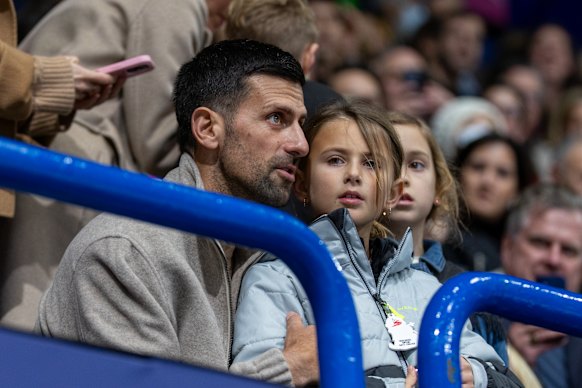
Amid the frenzy, one spectator's response captured the global awe: Novak Djokovic. The 24-time Grand Slam winner, attending the event with his family, wasn't there for the standard jumps. But when Malinin capped his routine with a signature backflip—gliding backward on one foot before launching into a full aerial somersault—Djokovic's reaction went viral.
Seated in the premium seats, the tennis great clutched his head in disbelief, mouthing 'What the heck?' as the arena erupted. The backflip, illegal in some competitions but allowed here as an exhibition element, added zero points but infinite entertainment value. "That's just showing off," joked one American reporter in the press scrum. Malinin, buzzing from the win, lit up when told of Djokovic's awe: "That's a once-in-a-lifetime moment. Seeing a famous tennis player watching my performance."
Djokovic, no stranger to defying limits in his own sport, later posted on social media: "Incredible athleticism! Figure skating just leveled up." The crossover moment highlighted the Olympics' magic—world-class athletes inspiring each other across disciplines.
The 'Voice' Behind the Routine
What set Malinin's program apart was its audacity. Using his own voice as the soundtrack was a bold choice, far removed from traditional orchestral scores. The slow-rap narration added a personal, edgy vibe, syncing with his explosive jumps and fluid spins. Critics praised it as innovative, though purists might call it risky. In a sport often criticized for rigidity, Malinin's approach injects youth and rebellion, appealing to a new generation of fans.
His journey to this pinnacle hasn't been easy. Training under coaches who emphasize quadruple training from a young age, Malinin has revolutionized men's figure skating. The quadruple axel, in particular, is his holy grail—a 2.5-rotation takeoff followed by four mid-air spins. Though incomplete tonight, it's a move that could define his legacy if perfected in future events.
Implications for Figure Skating's Future
Malinin's triumph signals a shifting tide in figure skating. With quads now the norm among elites, the sport is evolving toward greater difficulty, raising questions about athlete safety and judging fairness. The International Skating Union has discussed quad bonuses, but Malinin's performance underscores the need for balanced artistry amid technical wizardry.
For Team USA, this gold— their first in team skating since 2022—boosts morale heading into individual events. Japan, stung by the loss, will regroup with Kagiyama leading the charge. Italy's bronze, fueled by home support, adds to the Olympic narrative of underdogs rising.
As the Milano Cortina Games continue, Malinin's 'Quad God' moniker feels more earned than ever. In a world craving spectacle, his blend of vulnerability and virtuosity reminds us why we watch: not just for medals, but for moments that make legends. Whether it's breaking physics or just breaking records, Ilia Malinin is skating into history—one quad at a time.
This article draws on eyewitness accounts and official Olympic reports from the 2026 Winter Games.