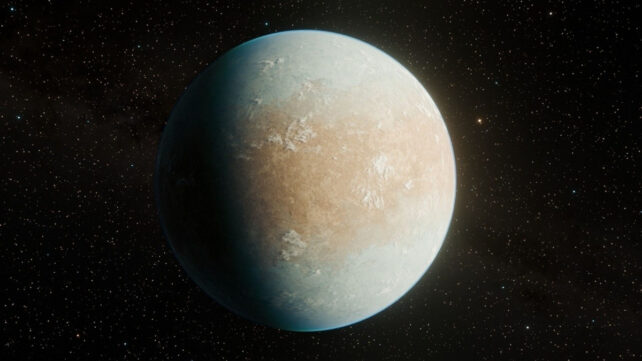
Frozen Earth-Like Exoplanet Discovered 150 Light-Years Away
In the vast expanse of the cosmos, the search for worlds beyond our solar system continues to yield astonishing results. Astronomers have recently announced the detection of HD-137010 b, a potential 'frozen bizarro Earth' just 150 light-years from our own planet. This icy exoplanet candidate, orbiting a Sun-like star, offers a tantalizing glimpse into the possibilities of habitable environments far from home. As exoplanet research accelerates, this discovery underscores the diversity and intrigue of alien worlds, pushing the boundaries of what we believe is possible for life in the universe.
What Are Exoplanets and Why Do They Matter?
Exoplanets, or planets outside our solar system, have revolutionized astronomy since the first confirmed detection in 1992. Today, over 5,500 exoplanets have been identified, ranging from gas giants larger than Jupiter to rocky worlds resembling Earth. These distant bodies orbit a variety of stars, from scorching hot ones to cool dwarfs, and their study helps us understand planetary formation, stellar evolution, and the potential for extraterrestrial life.
The significance of exoplanets lies in their role in answering fundamental questions: Are we alone? What kinds of environments can sustain life? Missions like NASA's Kepler and TESS telescopes have been pivotal, scanning millions of stars for subtle signs of orbiting planets. HD-137010 b fits into this narrative as a rare Earth-sized candidate in a potentially habitable zone, where conditions might allow for liquid water – a key ingredient for life as we know it.
The Rarity of Earth-Like Worlds
Among the thousands of known exoplanets, truly Earth-like ones are scarce. Most discoveries are either scorching hot Jupiters or frigid ice giants. Rocky, temperate planets in the habitable zone – the orbital sweet spot where surface temperatures could support liquid water – represent only a fraction of finds. Graphs of incident flux, measuring starlight received by a planet, highlight this rarity: Earth's position is an outlier among known worlds, making HD-137010 b's profile all the more exciting.
Details of the HD-137010 b Discovery
HD-137010 b was teased out from data collected by NASA's retired Kepler space telescope, which revolutionized exoplanet hunting through the transit method. This technique detects planets by observing periodic dips in a star's brightness as a world passes in front of it, revealing the planet's size and orbital period.
The candidate planet orbits HD-137010, a K-type dwarf star about 70% the mass and size of our Sun. This orange-hued star burns its hydrogen fuel more slowly, promising a lifespan exceeding the universe's current age of 13.8 billion years. HD-137010 b completes one orbit every 355 days – remarkably similar to Earth's 365-day year – placing it potentially within the star's habitable zone with a 51% probability.
Slightly larger than Earth at about 1.2 times its mass and radius, HD-137010 b receives less than a third of the solar energy Earth gets from the Sun. Surface temperatures could plummet to between -68°C and -85°C (-90°F to -121°F), colder than Mars. Yet, researchers suggest a CO2-rich atmosphere might trap enough heat to enable liquid water, drawing parallels to early Earth or Venus before its runaway greenhouse effect.
Challenges: A Snowball Planet Scenario?
While promising, HD-137010 b's chill raises questions. If its atmosphere mirrors Earth's CO2 levels, it could enter a 'snowball' state – a fully glaciated world reflecting most incoming light and perpetuating extreme cold, with temperatures dipping to -100°C. This mirrors theories of ancient Earth during 'Snowball Earth' episodes, where ice covered the globe but life persisted in subsurface oceans or volcanic vents.
Confirmation remains pending, as only one transit has been observed. Earth-like orbits demand years of monitoring for multiple dips, a challenge for current tech. The researchers express optimism, noting, 'This is the first planet candidate with Earth-like radius and orbital properties transiting a Sun-like star bright enough for substantial follow-up observations.'
Detection Methods and Future Prospects
The transit method has uncovered most small exoplanets, but it's biased toward close-in worlds. HD-137010 b's longer orbit pushed Kepler to its limits, demonstrating the detectability of temperate Earth-sized planets via single transits. Future missions like the European Space Agency's PLATO, launching in the 2030s, will excel at spotting such elusive targets with greater precision.
Beyond confirmation, atmospheric studies via telescopes like the James Webb Space Telescope could probe HD-137010 b for biosignatures – gases like oxygen or methane hinting at life. If additional planets exist, as suggested by multi-planet systems like our own, HD-137010 could host a 'solar system-like architecture' with worlds spanning the habitable zone, including a distant Jupiter analog.
Implications for Exoplanet Research
This find bolsters the case for habitable exoplanets around Sun-like stars, countering the focus on red dwarfs where tidal locking creates extreme day-night contrasts. It also highlights the need for diverse detection strategies, including radial velocity measurements to gauge mass and direct imaging for closer looks.
As we refine our understanding, discoveries like HD-137010 b fuel speculation about microbial life thriving under ice or in geothermal hotspots. They remind us that our blue marble is not unique but part of a galactic tapestry of possibilities.
Broader Context in Exoplanet Exploration
Exoplanet science is booming, with NASA's upcoming Habitable Worlds Observatory aiming to image and analyze Earth twins directly. Collaborations between space agencies promise to catalog thousands more worlds, refining estimates of habitable planets in the Milky Way – potentially billions.
From the frozen shores of HD-137010 b to scorching lava planets, these discoveries paint a universe teeming with variety. As technology advances, we edge closer to unlocking whether life is a cosmic commonplace or a rare spark. For now, this icy world invites us to dream of distant horizons where water flows beneath eternal frost.
(Word count: 782)
