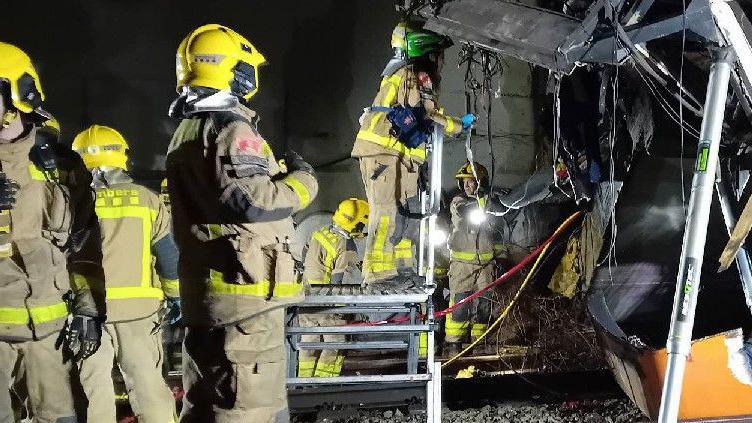
Barcelona Train Crash: Tragedy Strikes Amid Severe Weather
In a shocking turn of events, a commuter train near Barcelona derailed Tuesday evening, resulting in the death of the train driver and injuries to at least 37 passengers. The incident occurred between Gelida and Sant Sadurní, approximately 35 kilometers west of Barcelona, as heavy storms swept through north-eastern Spain.
Incident Details
Local media reports indicate that the Rodalies train collided with a retaining wall that had fallen onto the track due to the severe weather conditions. Catalonia regional fire Inspector Claudi Gallardo confirmed that all passengers were safely removed from the wreckage, with emergency crews working diligently to assess the situation.
Emergency Response
Eleven ambulances were dispatched to the scene in Gelida, with 35 fire crews assisting in the rescue efforts. One passenger was initially trapped inside the train but was successfully rescued. Later updates confirmed that no one remained inside the wreckage, and crews were conducting a sweep to ensure there were no additional victims.
Injuries and Evacuation
Among the injured, four were reported to be in serious condition. Emergency services evacuated the injured to nearby hospitals, including Moisès Broggi, Bellvitge, and Vila Franca. The swift response of emergency teams helped mitigate further harm, but the emotional toll on the community is undeniable.
Weather Plays Significant Role
The crashes come as coastal areas in eastern and north-western Spain remain on high alert due to the ongoing storms. The weather has been a contributing factor in multiple incidents, with another train on the Barcelona commuter network derailing earlier the same day. Spain's rail network operator, Adif, stated that the axle of that train was struck by a rock dislodged by the storm.
No Injuries in Second Derailment
Fortunately, no injuries were reported in the second derailment, which occurred between Blanes and Maçanet-Massanes, north-east of Barcelona. Services on both affected routes have been suspended as authorities investigate the causes and assess the damage.
Broader Context of Spanish Rail Accidents
These incidents follow a devastating train crash in Adamuz, Andalusia, just two days prior. In that accident, two high-speed trains collided, resulting in at least 42 fatalities. The Adamuz crash is considered one of the worst rail accidents in Spain in over a decade, highlighting broader concerns about rail safety and infrastructure.
Investigations Underway
Authorities are now focusing on understanding the full scope of the Barcelona-area derailments. Early reports suggest that the severe weather was a significant factor, but a thorough investigation will be necessary to determine the exact causes and prevent future occurrences.
Community and Government Response
The Barcelona community is reeling from the tragedy, with local officials and government representatives expressing their condolences to the families of the victims. Emergency services have been commended for their rapid and effective response, but the need for improved rail safety measures is now under scrutiny.
Looking Ahead
As Spain continues to grapple with the aftermath of these incidents, there is a growing call for enhanced rail infrastructure and stricter safety protocols. The recent accidents serve as a stark reminder of the vulnerabilities in the system and the importance of proactive measures to protect passengers.
For now, the focus remains on supporting the injured, honoring the memory of the driver, and working towards a future where such tragedies are minimized. The resilience of the Spanish people and the dedication of emergency responders offer a glimmer of hope in these difficult times.