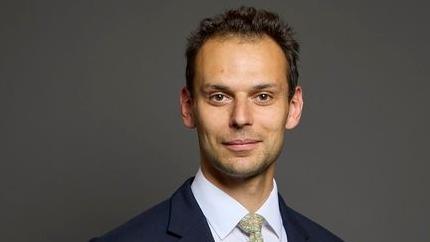
Cabinet Minister Josh Simons Hired PR Firm to Probe Journalists' Sources
In a revelation that has sparked widespread debate on press freedom and political accountability, Cabinet Office Minister Josh Simons has been accused of employing a high-profile PR and lobbying firm to investigate the sources behind critical media reports. The controversy centers on Simons' time as chief executive of Labour Together, a pro-Keir Starmer think-tank, where he allegedly sought to uncover how journalists obtained information about undeclared donations totaling over £700,000.
Background: From Think-Tank Leader to Government Minister
Josh Simons, now a key figure in the UK government as Cabinet Office Minister, has a background deeply embedded in Labour Party strategy. Before entering Parliament, he served as CEO of Labour Together, an influential think-tank aligned with current Prime Minister Keir Starmer's vision for the party. The organization played a pivotal role in shaping Labour's policy and electoral strategies, but it has not been without controversy.
The think-tank was previously led by Morgan McSweeney, who now serves as Starmer's chief of staff. Under Simons' leadership in 2023, Labour Together faced scrutiny over its financial reporting. In September 2021, the Electoral Commission fined the group £14,250 for late declarations of donations received between 2017 and 2020. This fine, while relatively modest, highlighted ongoing issues with transparency in political funding—a sensitive topic in UK politics amid calls for stricter regulations.
The Trigger: Media Exposés on Funding Shortfalls
The saga unfolded when investigative journalism began to peel back the layers of Labour Together's operations. Reports from outlets like The Sunday Times revealed discrepancies in the think-tank's donation disclosures, prompting questions about accountability. These stories, first amplified by the investigative website Democracy for Sale, alleged that the group had failed to report significant sums, raising eyebrows about potential conflicts of interest in Labour's ecosystem.
As the media scrutiny intensified, Simons reportedly turned to external expertise. According to a leaked contract obtained by the BBC, Labour Together commissioned APCO Worldwide—a global PR and lobbying firm known for its work with governments and corporations—to delve into the origins of these reports. The contract explicitly outlined tasks to "investigate the sourcing, funding and origins of a Sunday Times article about Labour Together," extending to upcoming works by two political authors.
The Investigation: Tactics and Allegations
APCO's proposed approach was comprehensive and multifaceted. The firm pledged to employ open-source intelligence, human intelligence gathering, and digital forensics to "establish who and what are behind the coordinated attacks on Labour Together." The goal? To compile a "body of evidence that could be packaged up for use in the media in order to create narratives that would proactively undermine any future attacks."
Central to the operation was Tom Harper, a journalist-turned-lobbyist at APCO, who was allegedly tasked with identifying sources for The Sunday Times and other publications. This move has drawn sharp criticism from media watchdogs, who argue it blurs the lines between legitimate security concerns and attempts to intimidate or silence investigative journalism.
The allegations suggest a pattern of defensive tactics within Labour's inner circle, reminiscent of broader concerns about how political entities respond to accountability. In an era where misinformation and leaks are rampant, such investigations could chill free speech, experts warn. "When politicians hire private firms to track journalists, it erodes public trust in both government and media," says media ethics professor Elena Vasquez from the University of London.
Simons' Defense: 'Suspected Illegal Hack'
Facing backlash, Simons has vehemently denied any intent to target UK journalists. In a statement posted on X (formerly Twitter), he described the claims as "nonsense" and clarified that the commission to APCO was solely to investigate a "suspected illegal hack," unrelated to reporters from The Sunday Times, The Guardian, or other outlets. "APCO's investigation never fully got to the bottom of this," he added, emphasizing his respect for journalism's role in democracy. "Those who know me know I think the work of journalists is vital to our democracy."
Neither Labour Together nor APCO Worldwide has responded to requests for comment on the matter. A government source indicated that officials are "looking into the claims," signaling potential internal reviews but no immediate action.
Broader Implications for UK Politics and Press Freedom
This scandal arrives at a precarious time for the Labour government, which has pledged greater transparency following years of Conservative-era controversies. With Starmer's administration still in its honeymoon phase, any whiff of impropriety could undermine efforts to rebuild public confidence. The involvement of figures like McSweeney—whose tenure at Labour Together predates the APCO contract—adds layers of intrigue, though sources close to him stress he was not directly involved.
From an SEO perspective, this story taps into perennial interests in political scandals, funding transparency, and media ethics. Searches for "UK political donations" and "Labour Party controversies" have spiked in recent months, reflecting public appetite for accountability. Analysts suggest the affair could prompt calls for reform in how think-tanks report finances, potentially influencing upcoming Electoral Commission guidelines.
Moreover, it highlights the growing role of PR firms in politics. APCO Worldwide, with its international footprint, exemplifies how lobbying intersects with governance. Critics argue that such firms enable opaque influence-peddling, a concern echoed in reports from Transparency International.
Reactions and Future Outlook
Journalism advocacy groups have been quick to condemn the probe, viewing it as an assault on source protection—a cornerstone of investigative reporting. The National Union of Journalists (NUJ) stated, "Attempts to unmask sources undermine the very foundation of democracy." Meanwhile, supporters of Simons point to the prevalence of cyber threats in politics, suggesting the hack claim warrants investigation without presuming malice toward the press.
As the story develops, eyes will be on parliamentary questions and possible inquiries. For Simons, navigating this could test his political resilience. In a landscape dominated by digital leaks and rapid news cycles, this episode serves as a stark reminder of the tensions between security, secrecy, and scrutiny in modern governance.
Everythiiing.com will continue to monitor updates on this unfolding controversy, providing in-depth analysis as new details emerge.