In a robust appearance on Sunday with Laura Kuenssberg, Culture Secretary Lisa Nandy delivered the UK government's firm stance on several pressing international and domestic issues, most notably asserting that the future of Greenland must be determined solely by its own people. Nandy’s interview provided crucial insight into the government’s position amidst escalating international tensions, particularly concerning commentary from former US President Donald Trump.
Greenland: Self-Determination is Non-Negotiable
The central focus of Nandy's appearance was the ongoing debate surrounding Greenland's geopolitical status, especially in light of recent rhetoric suggesting external interests in its future. Nandy was unequivocal in her support for the self-governance of the Danish autonomous territory.
"The future of Greenland is for its people to decide," Nandy stated, reinforcing what she termed the UK government's "non-negotiable" position. This declaration serves as a clear signal against any unilateral attempts by foreign powers to dictate the island's destiny, placing the principles of self-determination at the forefront of the UK’s diplomatic considerations in the region.
Responding to Trump’s Tariff Threats
Nandy also directly addressed the controversial threat by Donald Trump to impose tariffs on several European nations, specifically referencing the context surrounding Greenland. She dismissed the proposed measures as both "wrong and unproductive."
The Culture Secretary suggested a clear diplomatic approach: while the UK government must publicly challenge such misguided policies, private negotiations are the effective route for resolution. This stance contrasts sharply with the public posturing often seen in international trade disputes.
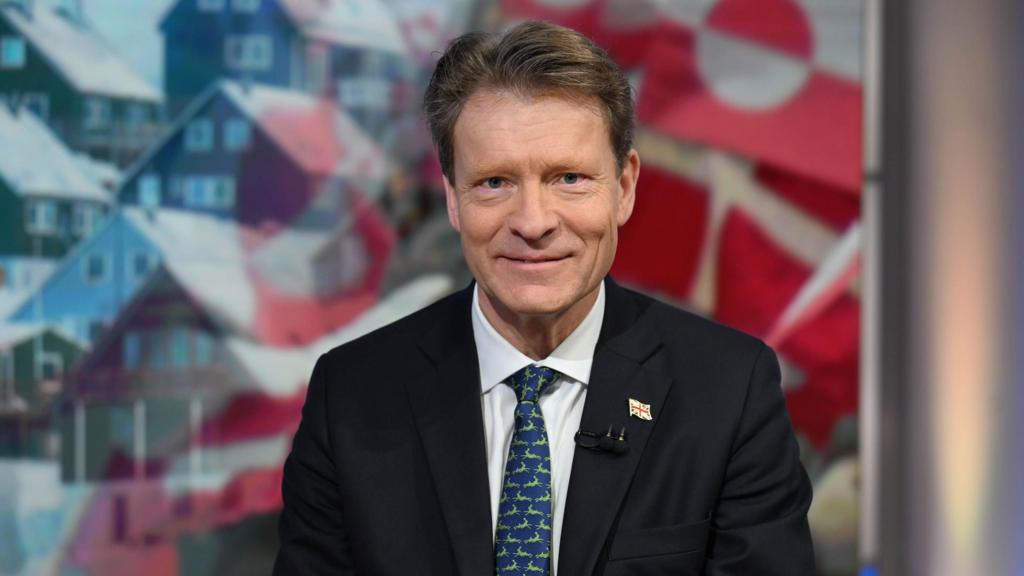
The segment also featured commentary from Reform UK’s Richard Tice, who agreed that Trump’s approach on tariffs was incorrect, emphasizing that private negotiation is preferable to public confrontation. Tice’s comments, alongside Nandy’s, highlighted a cross-party consensus on rejecting the tariff strategy, even if their overall political perspectives diverge significantly.
Domestic Agendas: Safety and Accountability
Shifting focus to domestic policy, Nandy tackled difficult subjects ranging from online safety enforcement to legacy accountability legislation, often referred to as the Hillsborough Law.
The Need for Better Social Media Enforcement
When questioned about potential bans on social media platforms for under-16s, similar to models seen in Australia, Nandy acknowledged that the current state of affairs is unacceptable for young people’s safety online. She stressed that the issue is less about creating entirely new laws and more about rigorously enforcing existing ones.
"Not enough enforcement action is taking place," Nandy argued, indicating a belief that current statutory frameworks possess the necessary teeth, but the necessary regulatory muscle is currently lacking in application. This suggests a forthcoming focus on regulatory oversight and penalties to hold platforms accountable for compliance.
Navigating the Hillsborough Law Debate
The Culture Secretary faced scrutiny regarding the government’s commitment to the proposed Hillsborough Law, which aims to increase transparency and prevent the withholding of information by public bodies, particularly security services, following major disasters.
Nandy firmly rejected suggestions that the security services would be exempt from the new legal requirements. She emphasized the government’s determination to avoid situations like the Manchester Arena inquiry, where information was allegedly withheld. Her commitment was to ensure the law is applied "without fear or favour," underscoring a desire for comprehensive accountability across all state organs.
Defending NHS Leadership
Finally, Nandy offered a robust defence of Health Secretary Wes Streeting amid questions about high NHS waiting times. Rather than accepting criticism, Nandy pointed to record investment in the health service and falling waiting lists as evidence of progress.
She also praised the environment within the Cabinet that allows for robust internal debate, noting that Streeting possesses "strong views" which she respects. This defence serves to project an image of a government unified in its aims, even if individual ministers hold distinct opinions on the execution of policy.
Overall, Lisa Nandy’s interview provided a comprehensive overview of the government’s current priorities—upholding international norms regarding sovereignty, tackling online harm, and strengthening domestic accountability measures. Her measured but firm responses solidify her position as a key voice within the current political landscape.