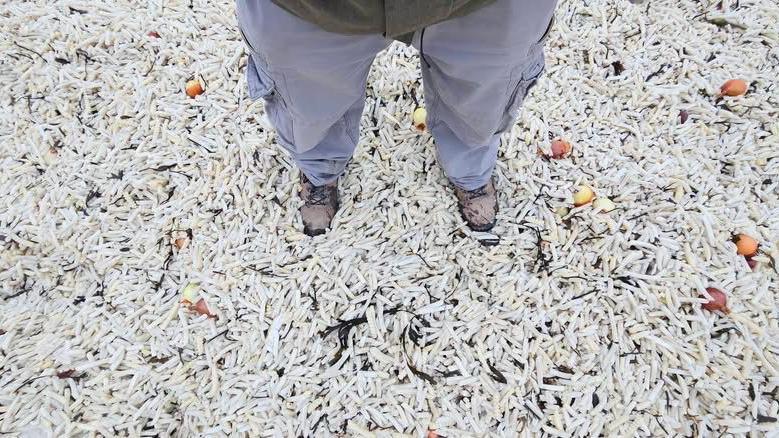
EASTBOURNE, GB – A bizarre and unprecedented clean-up operation is underway on the Sussex coast after thousands of bags of chips mysteriously washed ashore, transforming stretches of beach near Eastbourne into a 'sea of chips.' The unusual maritime debris arrived following the breakup of several shipping containers found adrift in the English Channel.
The incident, centered around the Falling Sands area near the iconic Beachy Head cliffs, saw volunteers mobilised over the weekend to tackle the mammoth task of removing the starchy disaster. Reports from the scene described scenes of near-surreal pollution, with discarded food packaging and potatoes piled high.
The Scale of the 'Chip Wreck'
The debris originated from shipping containers carrying food and packaging that broke up at sea. While several containers had been spotted washing ashore earlier in the week near Seaford and other coastal points, the sheer volume of the cooked potato product that followed has stunned local residents and environmental groups.
Trisha Barros, a veterinary nurse who assisted in the clean-up, recounted the shocking sight to BBC Radio Sussex. “When I saw the beach on Saturday it was just a sea of chips, it was a bit insane,” she said. Barros noted that the bags were stacked up to 1.5 feet high in some areas, stretching “as far as the eye can see.”
Barros, alongside her partner and other mobilized locals, began clearing hundreds of bags immediately after a call for help went out on social media. Eastbourne Borough Council (EBC) confirmed that a significant portion of the plastic packaging had largely been removed thanks to the swift action of these volunteers.
Wildlife Concerns Mount
Beyond the visual impact, the primary concern driving the rapid response is the potential threat to marine and coastal wildlife. Veterinary professionals and wildlife rescue services have voiced serious alarms over the ingestion risk posed by the mixed debris.
“Chips, onions, plastic, all of these are toxic to them,” Barros explained, highlighting the danger to birds and seals who might mistake the plastic bags for food or consume the processed potatoes.
Trevor Weeks, founding director of the East Sussex Wildlife Rescue and Ambulance Service, provided a technical assessment of the ecological threat. While plastic ingestion is a clear danger, Weeks pointed to the immediate chemical impact of the decomposing potatoes. “This can lead to localised oxygen depletion which can affect fish, crustaceans, and other small organisms, especially in sheltered areas or tidal pools,” he stated.
Furthermore, Weeks warned that the high starch load from the massive quantity of chips poses a risk to scavengers. Ingestion could lead to severe gastrointestinal distress, including “gut fermentation, cause diarrhoea, vomiting, regurgitation, dehydration, [and] bloat.”
Maritime Investigation and Wider Context
The incident is part of a growing pattern of maritime incidents affecting the South Coast. HM Coastguard confirmed that aircraft were deployed to survey the offshore area, reporting no further containers visible at sea as of Friday. Several containers had previously washed up along the coast from Selsey to Beachy Head.
This recent event follows closely on the heels of other significant container losses. Just days before, several containers fell from two separate ships off the Isle of Wight during Storm Goretti. This occurred only a month after 16 containers were lost from the cargo vessel Baltic Klipper near the same area.
East Sussex County Council has advised the public to exercise extreme caution when visiting the coastline while communications continue with maritime salvage specialists, Brand Marine, to ensure the area is fully secured.
The swift, community-led response to the Eastbourne chip spill serves as a potent reminder of the fragility of coastal ecosystems and the immediate need for citizen action when environmental hazards strike. While the landscape has been largely cleared of the immediate potato pile-up, the long-term ecological monitoring of the affected zones remains crucial.