Pilot Praised for Saving 55 in Somali Plane Beach Crash
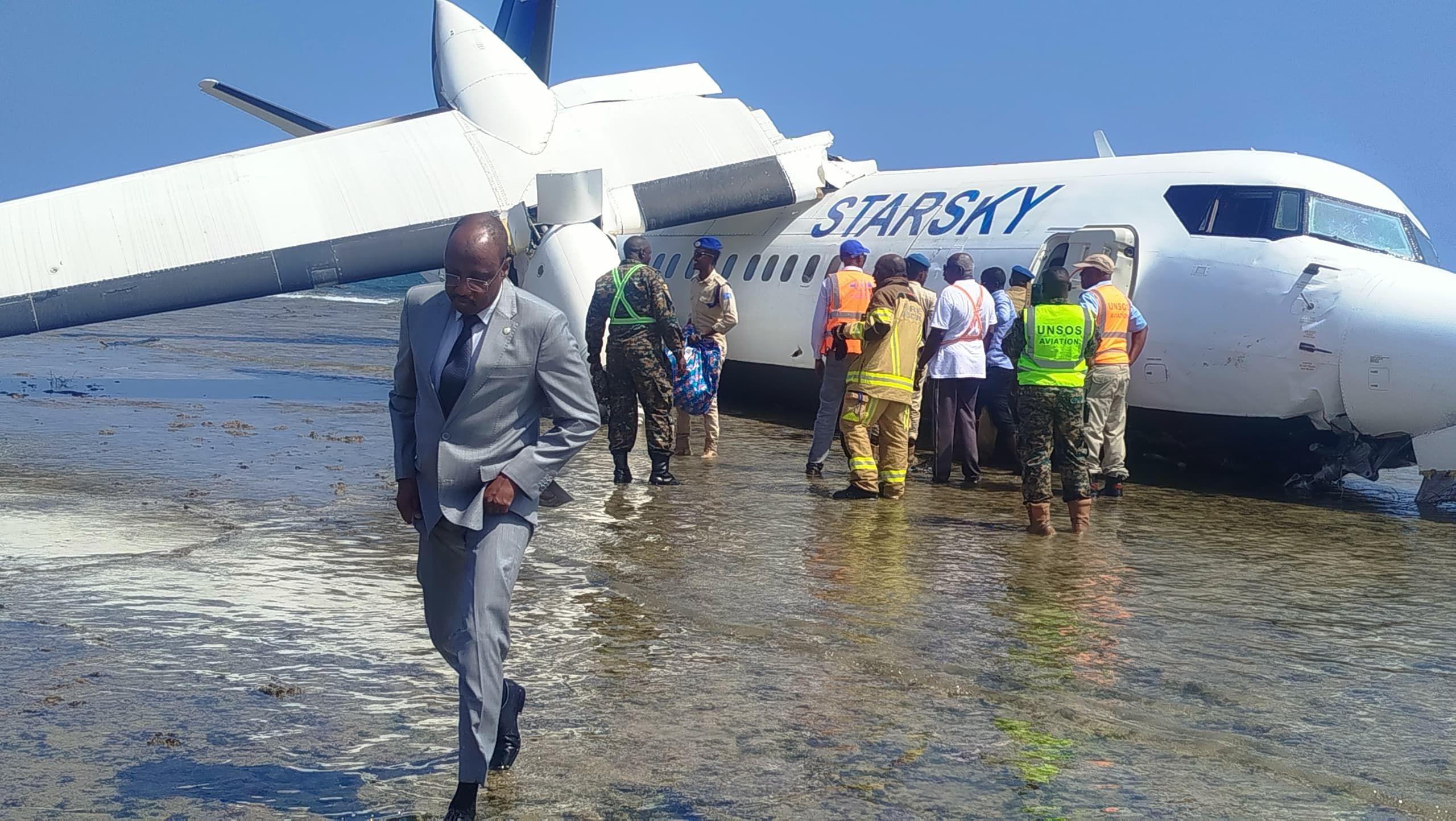
In a heart-pounding aviation drama that unfolded on the shores of the Indian Ocean, a Somali passenger plane experienced a harrowing technical failure, leading to a crash-landing just outside Mogadishu's international airport. Miraculously, all 55 people on board—50 passengers and five crew members—emerged unscathed, thanks to the pilot's exceptional skill and composure. This incident, which occurred on February 10, 2026, has spotlighted both the vulnerabilities in regional aviation and the heroism that can turn potential tragedy into triumph.
The Incident Unfolds: From Takeoff to Touchdown
The flight, operated by Starsky Aviation on a Fokker 50 aircraft, was en route to Puntland from Mogadishu when disaster struck shortly after departure. According to Somalia's Civil Aviation Authority (CAA), the crew reported a technical issue almost immediately after takeoff and requested an urgent return to the capital's airport. The plane circled back and attempted a landing, but the fault—details of which remain under investigation—caused it to overshoot the runway dramatically.
Instead of coming to a halt on the tarmac, the aircraft veered off and plunged into the shallow waters adjacent to the runway. Eyewitness footage shared on social media platforms captured the tense moments as the plane skidded into the sea, its wings partially submerged in the turquoise waters under a clear blue sky. Passengers were seen evacuating calmly, wading through ankle-deep water to safety on the sandy shoreline. The proximity of Mogadishu's Aden Adde International Airport to the Indian Ocean—literally meters away—turned what could have been a catastrophic overrun into a survivable beach landing.
Ahmed Macalin Hassan, director of the CAA, confirmed that no serious injuries were reported. "The plane's position in shallow water prevented any major structural failure, and the crew's preparedness was key," he stated in an official release. Initial reports suggest the technical fault might involve braking systems or engine performance, but a full investigation by Somali authorities and international aviation bodies is underway to pinpoint the exact cause.
Pilot's Quick Thinking: A Story of Heroism
At the center of this survival tale is the unnamed pilot, whom Starsky Aviation has publicly hailed as a hero. Spokesman Hassan Mohamed Aden praised the captain's "swift and calm decision-making," noting that his choice to return to Mogadishu rather than push on to a distant alternate airport likely saved lives. In high-stakes aviation emergencies, pilots are trained to prioritize immediate safety, and this case exemplifies that protocol in action.
Aviation experts have drawn parallels to other notable emergency landings, such as the 2009 'Hudson River Miracle' where Captain Chesley Sullenberger ditched a US Airways flight in the Hudson. While the Somali incident lacks the drama of a mid-air bird strike, the pilot's ability to manage a failing aircraft over a short distance and execute a controlled ditching on soft terrain (sand and water) underscores the razor-thin margins in modern flying.
"In regions like Somalia, where infrastructure can be challenging, pilots often face compounded risks," says Dr. Elena Vasquez, an aviation safety analyst with the International Air Transport Association (IATA). "This pilot's training and instincts turned a potential disaster into a testament to human capability." Starsky Aviation, a relatively small carrier serving domestic routes in Somalia, has committed to cooperating fully with investigators and reviewing its maintenance protocols.
Evacuation and Rescue Efforts
The response on the ground was swift and coordinated. The African Union's mission in Somalia (AMISOM) reported that UN and AU troops were deployed immediately to secure the site and assist with evacuations. Somalia's Transport Minister arrived at the scene shortly after, overseeing the operation as passengers were ferried to medical facilities for checks—though all were cleared without need for hospitalization.
Images from the aftermath show the Fokker 50, a workhorse twin-engine turboprop commonly used for short-haul flights in Africa, resting awkwardly in the surf. Its fuselage remained largely intact, with waves gently lapping at the wings. Social media buzzed with relief and admiration, with hashtags like #SomaliMiracle trending regionally.
Broader Implications for Aviation Safety in Africa
This incident arrives amid growing scrutiny of aviation safety in East Africa, where aging fleets, limited maintenance resources, and challenging operational environments pose ongoing risks. Somalia, in particular, has seen improvements in its civil aviation sector since the establishment of the CAA in recent years, but incidents like this highlight the need for continued investment.
The CAA has grounded similar aircraft in Starsky's fleet pending inspections, and international partners, including the European Union Aviation Safety Agency (EASA), may provide technical support for the probe. Globally, passenger plane crashes have declined dramatically due to advancements in technology and training—according to the Aviation Safety Network, 2025 saw fewer than 10 fatal commercial incidents worldwide. However, non-fatal events like overshoots remind us that vigilance is eternal.
For passengers in high-risk regions, such stories offer reassurance: modern cockpits are equipped with redundancies, and pilots undergo rigorous simulations for just these scenarios. Yet, experts call for enhanced runway safety measures at coastal airports, such as extended barriers or arrestor systems, to prevent future overshoots.
Passenger Perspectives and Airline Response
Among the survivors, accounts emerging from interviews paint a picture of controlled chaos. One passenger, speaking anonymously to BBC Somali, described the moment: "We felt the plane shake after takeoff, then the pilot's voice was steady, telling us to prepare for landing. When we hit the water, it was like a boat ride—scary but survivable." Starsky Aviation has offered counseling and compensation, emphasizing their commitment to safety.
As investigations continue, this event serves as a stark reminder of aviation's dual nature: the thrill of flight shadowed by its perils. In Mogadishu, the wreckage has been salvaged, but the story of survival will endure, inspiring pilots and reassuring travelers that heroism soars above mechanical mishaps.
This article is based on reports from BBC News and official statements from Somali authorities. Everythiiing.com will update as more details emerge.