Private Investigator Confesses Unlawful Acts in Prince Harry Privacy Lawsuit
In a dramatic turn during a high-stakes privacy trial at London's High Court, a 79-year-old American private investigator has admitted to engaging in 'unlawful stuff' related to Prince Harry. The confession, delivered through a written statement, has intensified scrutiny on the practices of UK tabloids and their use of private investigators to uncover personal details of celebrities. This revelation forms part of a broader legal battle where Prince Harry, alongside figures like Sir Elton John and Baroness Doreen Lawrence, accuses Associated Newspapers Limited (ANL)—publisher of the Daily Mail and Mail on Sunday—of systemic privacy violations over two decades.
Background on the Private Investigator and His Career
Dan Portley-Hanks, known in professional circles as 'Detective Danno,' built a controversial career spanning decades in the shadowy world of private investigation. Released from prison in 1979, he spotted an advertisement for training in the field and quickly established his own company. Initially working as an in-house investigator for US news programs, Portley-Hanks pivoted to serving British tabloids in the mid-1990s amid a surge in demand for salacious celebrity scoops.
His services became a staple for journalists at the Mail on Sunday, particularly reporters Caroline Graham and Sharon Churcher, who he described as his 'best clients.' Operating as a 'database guy,' Portley-Hanks could unearth phone numbers, contact details, and other private information in mere minutes using a target's name or existing phone number. This efficiency made him indispensable during the height of tabloid frenzy in the early 2000s, a period marked by aggressive reporting on royal family members and global celebrities.
The private investigation industry in the UK and US has long been a double-edged sword. On one hand, legitimate PIs assist in legitimate inquiries, from corporate due diligence to missing persons cases. In the UK, the sector is regulated under the Private Security Industry Act 2001, requiring licenses for surveillance activities. However, the line blurs when media outlets enlist investigators for invasive tactics, raising ethical and legal red flags. Portley-Hanks' story exemplifies how the pursuit of headlines can lead to unlawful practices, including unauthorized access to phone records and personal data.
From Prison to Tabloid Asset: Portley-Hanks' Rise
Portley-Hanks' entry into the field was unconventional. Just a week after his release, he embraced the profession, leveraging his street smarts into a lucrative venture. By the 1990s, British newspapers flooded him with requests, transforming him into an 'independent supplier of data.' His work extended beyond mere data retrieval; he facilitated complex operations, including tracing victims of high-profile cases like Jeffrey Epstein's, where he was tasked with locating a woman named 'Virginia'—later identified in public records.
The Courtroom Confession: Targeting Prince Harry and Celebrities
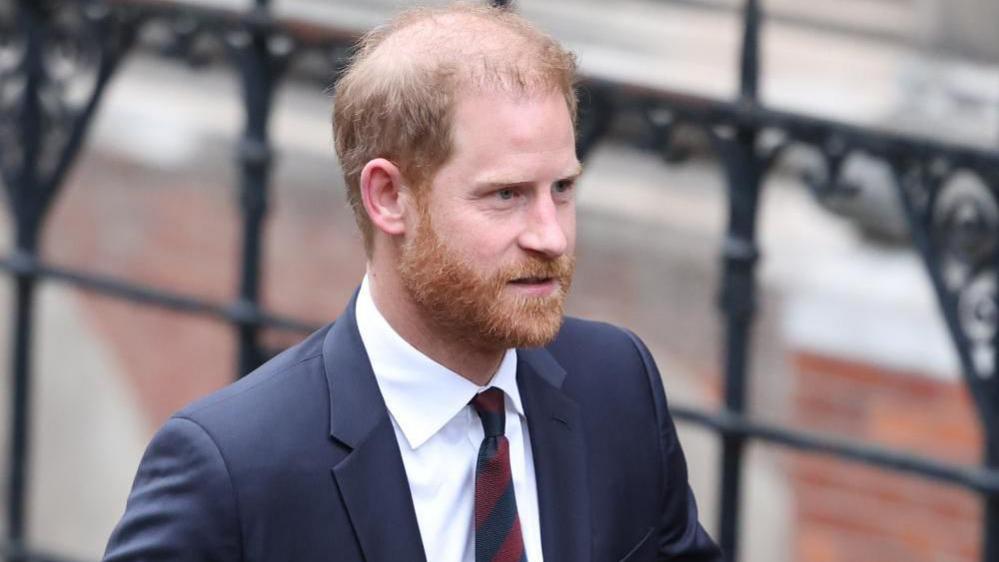
At the heart of the testimony is Portley-Hanks' admission concerning Prince Harry, the Duke of Sussex. 'I recall that I did stuff for the Mail On Sunday and Daily Mail in relation to Prince Harry. I know that I did unlawful stuff on him but I cannot recall what exactly,' he stated. This vague yet damning acknowledgment has fueled the claimants' case, suggesting a pattern of intrusive surveillance on the royal, who has long campaigned against media intrusion following the death of his mother, Princess Diana.
The scope of his activities wasn't limited to Harry. Portley-Hanks detailed providing 'detailed information' on celebrity couples, including Formula One star Lewis Hamilton and singer Nicole Scherzinger, Jennifer Lopez and her then-partner Chris Judd, and Kylie Minogue with Olivier Martinez. Each instance correlated with swift Mail on Sunday articles, published within weeks of his deliveries. These revelations paint a picture of a systematic operation where private investigators served as the backbone of tabloid exposés, often crossing into illegal territory like obtaining phone records without consent.
Further allegations include a request from Sharon Churcher to funnel money to a former police officer, who then paid a serving officer for access to confidential Epstein files. While ANL disputes these claims, labeling them as unsubstantiated, the testimony underscores the investigator's role in bridging media and potentially corrupt law enforcement channels.
Emotional Toll and Motivation to Speak Out
In a poignant close to his statement, Portley-Hanks expressed remorse: 'The digging into the privacy of those people caused a lot of anguish in me.' Now in his late years, he says he's 'coming forward to do the right thing before I die.' This personal reflection adds a human layer to the scandal, highlighting the moral quandaries faced by those in the investigative trade.
ANL's Defense and the Broader Legal Battle
Associated Newspapers, through barrister Antony White KC, vehemently denies any unlawful information gathering targeting Prince Harry. White argues that the claimants lack concrete evidence for Portley-Hanks' 'confessions,' suggesting they were obtained via 'financial inducements and threats.' He points to a 'drip feed' of disclosures that fail to link specific incidents to ANL journalists, particularly Graham.
Regarding the Epstein payment claims, White asserts the documents were publicly available from civil proceedings, not the product of corruption. The publisher maintains that its reporting relied on ethical sourcing, framing the trial as an overreach by celebrities seeking to stifle press freedom.
The case, involving seven claimants including Sir Elton John—who alleges similar targeting alongside his partner David Furnish—and Baroness Doreen Lawrence, whose pursuit of justice for her son Stephen's murder was allegedly undermined by surveillance, is set to conclude in March. If successful, it could result in significant damages and reforms in how UK media engages private investigators.
Implications for Private Investigators and Media in the UK
This scandal reignites debates on the role of private investigators in journalism. In the UK, post-Leveson Inquiry reforms aimed to curb phone-hacking and blagging, but cases like this suggest persistent vulnerabilities. The Information Commissioner's Office has previously fined media outlets for data misuse, yet enforcement remains challenging in a digital age where data is commodified.
For aspiring PIs in Britain, the industry offers opportunities in legitimate sectors like fraud detection and family law, but the Portley-Hanks saga serves as a cautionary tale. Regulation bodies like the Security Industry Authority emphasize compliance, warning that unlawful acts can lead to imprisonment and professional ruin.
Prince Harry's involvement amplifies the story's global reach, tying into his ongoing fight against the British press. As the trial progresses, it could catalyze stricter oversight, ensuring that the quest for truth doesn't trample privacy rights. For now, Portley-Hanks' confession stands as a stark reminder of the human cost behind tabloid headlines.
(Word count: 782)

