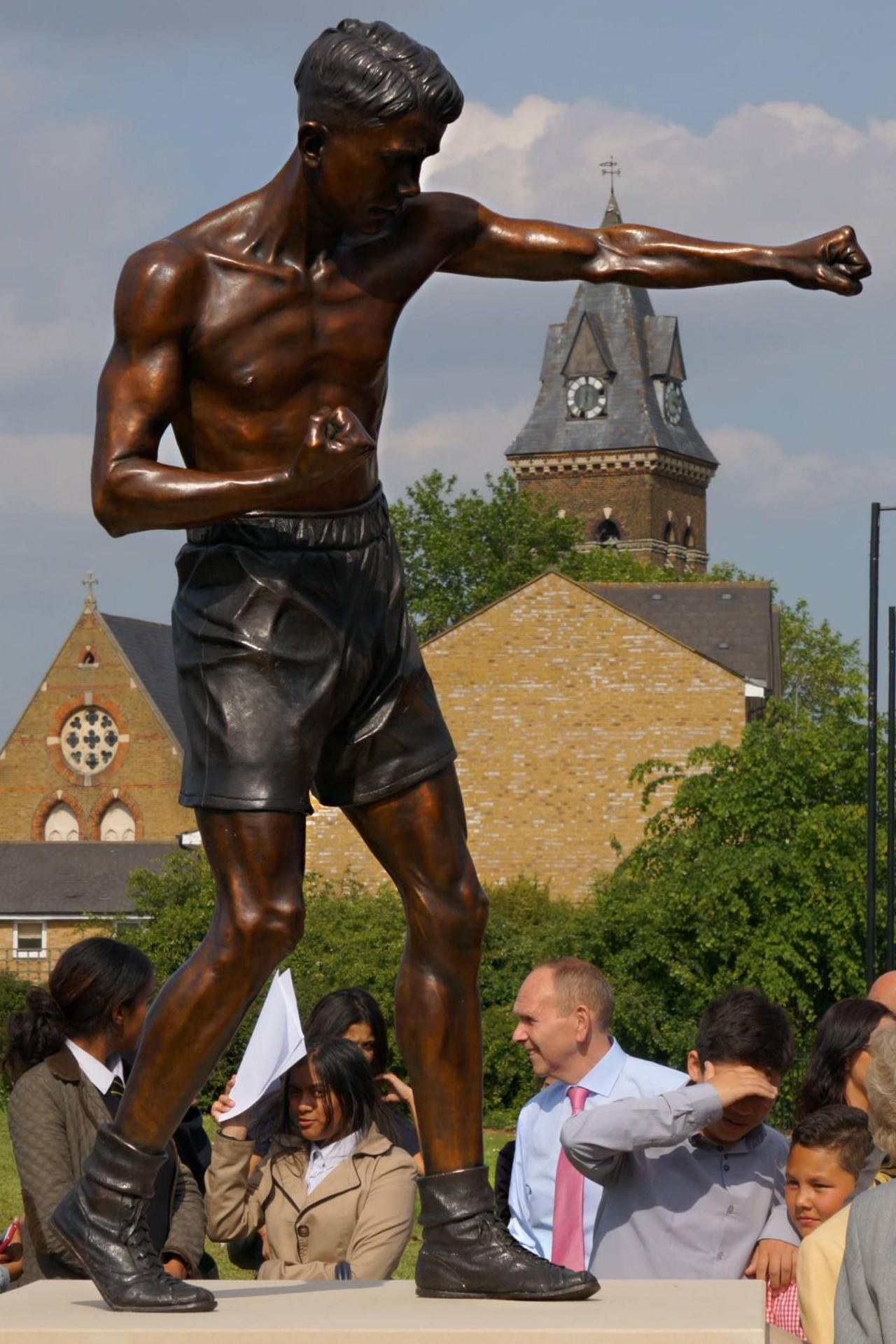
In a brazen act that has stunned the east London community, a cherished bronze statue of world boxing champion Teddy Baldock has been stolen from Langdon Park in Poplar. The theft, captured on CCTV, occurred late Sunday evening, leaving behind only the statue's empty boots on its plinth. This incident not only robs the area of a cultural landmark but also tarnishes the legacy of a local hero who rose from humble beginnings to international fame.
The Dramatic Heist Unfolds
According to footage released by the Metropolitan Police, four individuals dressed entirely in black approached the statue around 8:00 PM GMT. Working swiftly, they wrenched the life-sized bronze figure from its base and concealed it inside a cargo bike. The suspects were last seen heading northbound toward Bromley-by-Bow Underground station, vanishing into the night. The plinth now stands as a stark reminder of the loss, with the statue's boots—the only part too heavy or awkward to remove—left bolted in place.
Detective Superintendent Oliver Richter, who oversees neighbourhood policing in Tower Hamlets, described the event as deeply distressing. "We understand this is a very upsetting time for our community to see a monument to a local hero treated with such disregard," Richter stated. "Our officers are pursuing every lead aggressively, and we urge anyone with information to come forward." The police have launched a full investigation, analyzing CCTV from surrounding areas and appealing for public assistance.
Who Was Teddy Baldock? A Boxing Prodigy from Poplar
Teddy Baldock, born in 1907 in the working-class docks of Poplar, embodied the grit and determination of early 20th-century London. Nicknamed the "Pride of Poplar," he began boxing at age 14 to support his family amid the hardships of post-World War I Britain. His meteoric rise culminated in 1927 when, at just 19 years old, he defeated American champion Vic Fraser in front of 10,000 fans at London's Olympia, claiming the world bantamweight title. This made Baldock the youngest-ever world boxing champion, a record that still stands.
Baldock's style was electrifying—blending lightning-fast footwork, precise punches, and an unyielding spirit that captivated audiences. He defended his title multiple times, including a notable rematch against Panama Joe Gans in 1929. However, injuries forced his retirement in his mid-20s, a tragic end to a promising career. Post-boxing life was far from glamorous; Baldock slipped into poverty, working odd jobs and battling health issues until his death in 1971 at age 63. For decades, his achievements faded from public memory, overshadowed by the era's economic struggles.
Reviving the Legend: The Statue's Creation
Recognition came posthumously in 2014 when a statue was unveiled in Langdon Park, funded through community efforts led by Baldock's grandson, Martin Sax. The bronze sculpture, depicting Baldock in a classic boxing stance, symbolized Poplar's resilient spirit. "It was a huge task to raise the money," Sax recounted in interviews. "To think thieves took it for scrap value—it's heartbreaking." The statue had become a focal point for local pride, especially in an area still grappling with deprivation and regeneration challenges.
Community Outrage and Broader Implications
The theft has ignited widespread anger across Tower Hamlets and beyond. Social media is abuzz with calls for justice, with hashtags like #BringBackTeddy trending locally. Residents view the statue not just as art, but as a beacon of hope for young people in Poplar, where youth boxing clubs continue Baldock's legacy by channeling energy into positive outlets.
Martin Sax expressed profound devastation: "I'm angry and upset. Teddy came from nothing, started earning at 14, won the world title at 19—and now this? For what, a bit of metal?" His words underscore the emotional toll, highlighting how the statue represented more than bronze; it was a testament to overcoming adversity in one of London's most historic yet challenged neighborhoods.
Experts speculate the motive was scrap metal theft, given rising metal prices and a spate of similar crimes in the UK. In 2023 alone, the British Metal Recycling Association reported over 5,000 incidents of stolen public art and memorials, often melted down for profit. This case, however, stands out due to its cultural significance. Poplar, once a hub of shipbuilding and immigration, has seen waves of change—from the 1917 rent strikes to modern Olympic developments—but Baldock's story remains a thread connecting past and present.
Police Appeal and Next Steps
The Met Police are ramping up efforts, releasing suspect descriptions: all male, clad in black hoodies and trousers, using a distinctive cargo bike. Anyone spotting a similar vehicle or the statue for sale on black markets is urged to contact 101, quoting reference 4567/01AB. Rewards may be offered for tips leading to recovery.
As the investigation unfolds, questions linger about park security. Langdon Park, part of the Queen Elizabeth Olympic Park legacy, boasts green spaces but has faced vandalism issues. Community leaders are pushing for enhanced CCTV and patrols, arguing that protecting cultural assets is vital for social cohesion.
The Enduring Legacy of the Pride of Poplar
Beyond the immediate shock, this theft prompts reflection on Baldock's enduring impact. His life story—from dockside kid to global champion—mirrors the aspirations of many in east London today. Boxing gyms in Poplar still invoke his name, inspiring a new generation amid urban challenges like knife crime and inequality.
While the statue's fate remains uncertain, the outpouring of support suggests it won't be forgotten. Fundraising talks for a replacement are already underway, with Sax vowing, "We'll get Teddy back where he belongs." In a city of millions, stories like Baldock's remind us of the human triumphs that define communities. As police close in on the thieves, Poplar stands united, ready to reclaim its pride.
This incident also highlights broader UK trends in heritage crime. According to Historic England, over £100 million in damages occur annually from thefts of public monuments. For Poplar, it's personal—a slice of history ripped away, but not irreparably lost.

