Thomas Massie Presses Bondi on Epstein File Redactions
Alex Thompson
Feb 14, 2026 • 3 min read
Massie Challenges Bondi on Epstein File Redactions
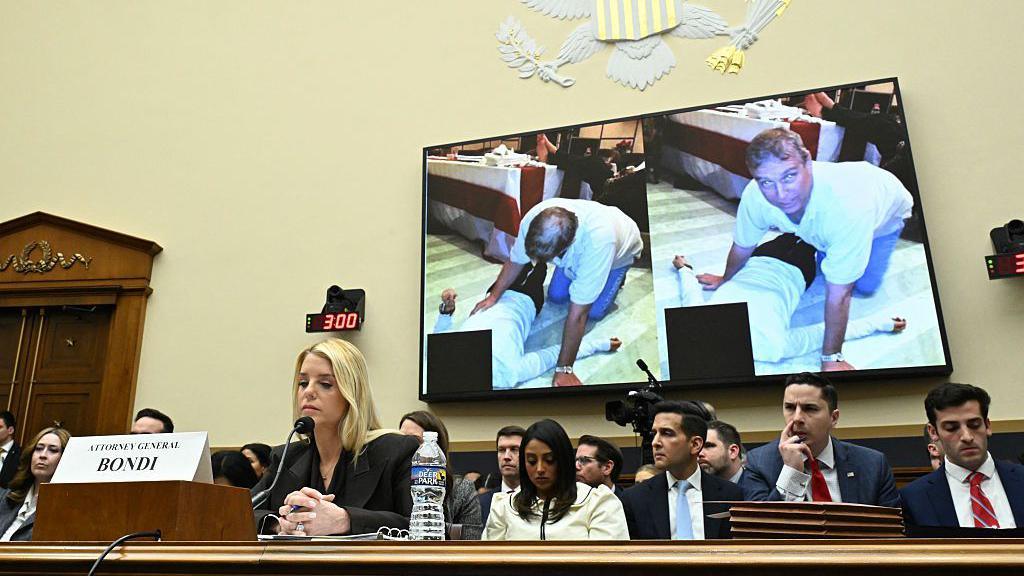
A fiery congressional hearing on the handling of Jeffrey Epstein's files saw Republican Congressman Thomas Massie directly confront US Attorney General Pam Bondi, demanding accountability for the redactions made within the trove of documents. The exchange, which took place before the House of Representatives Judiciary Committee, highlighted deep-seated frustrations over the Justice Department's transparency and its handling of sensitive information related to the late sex offender.
Concerns Over Redacted Names and Accountability
The hearing, which also featured testimony from victims of Epstein's abuse, was largely dominated by discussions surrounding the Justice Department's release of millions of files. While Bondi defended the department's efforts to protect victims, lawmakers across the aisle expressed significant concerns about the redaction process. A bipartisan group of representatives has accused the department of improperly obscuring names of individuals who are not protected by victim status.
Thomas Massie, a vocal proponent of transparency, pressed Bondi on who was responsible for the initial redactions and whether anyone would be held accountable for perceived failures. Massie dramatically stated that the issue was "bigger than Watergate," suggesting a systemic problem that has spanned multiple administrations and transcended partisan politics.
"This is a political joke," Bondi retorted as Massie persisted, questioning why certain names, such as billionaire Les Wexner, were initially blacked out from the files. Wexner, a businessman who previously alleged Epstein defrauded him of millions, had his legal team informed in 2019 that he was considered a source of information about Epstein, not a victim. Massie's line of questioning aimed to uncover the rationale behind such redactions and the potential for political influence in the process.
Victims' Voices and Bondi's Defence
The hearing was attended by several of Epstein's victims, whose presence underscored the gravity of the proceedings. In her opening statement, Bondi acknowledged Epstein as a "monster" and offered apologies to the survivors for their suffering. However, the sentiment of solidarity was strained by the ongoing criticisms regarding the file release.
Democratic congresswoman Pramila Jayapal voiced her dismay, citing instances where "nude images" of survivors were allegedly released, despite their identities being protected for decades. The fact that all survivors present stood when asked if they had been unable to meet with the Justice Department further amplified these concerns.
Bondi, in turn, characterised Jayapal's questioning as "theatrics" and refused to engage in what she perceived as a "gutter" debate. She maintained that officials were doing their best to adhere to legislative timelines for releasing the files and that any "inadvertent" releases of names were immediately redacted.
Ghislaine Maxwell's Prison Transfer
Another point of contention during the hearing was the transfer of Epstein's accomplice, Ghislaine Maxwell, from a low-security Florida facility to a minimum-security prison camp in Texas. Democrat Deborah Ross questioned Bondi directly, urging for Maxwell's immediate return to a maximum-security prison. Bondi stated that such decisions were the purview of the Bureau of Prisons and that she had only learned of the transfer after it occurred. She expressed her hope that Maxwell would "die in prison."
Marina Lacerda, an Epstein survivor present at the hearing, shared her disappointment with Bondi's approach, stating to the BBC that she had been "totally ignored" and that Bondi's department had made no effort to contact survivors. Lacerda also accused Bondi and the Justice Department of attempting to "intimidate us" into silence.
Broader Implications of the Redactions
Massie's assertion that the issue of redactions in the Epstein files is "bigger than Watergate" points to a wider concern about the integrity of government processes and the potential for sensitive information to be manipulated or concealed. The fact that the Justice Department has, in at least one instance, unredacted names after allowing lawmakers to review unredacted versions of the files suggests a reactive rather than proactive approach to transparency.
The ongoing scrutiny of the Epstein files and the Justice Department's handling of them raises critical questions about institutional accountability, the protection of victims, and the public's right to know. As Congressman Massie and others continue to push for answers, the ramifications for government transparency and trust are significant.