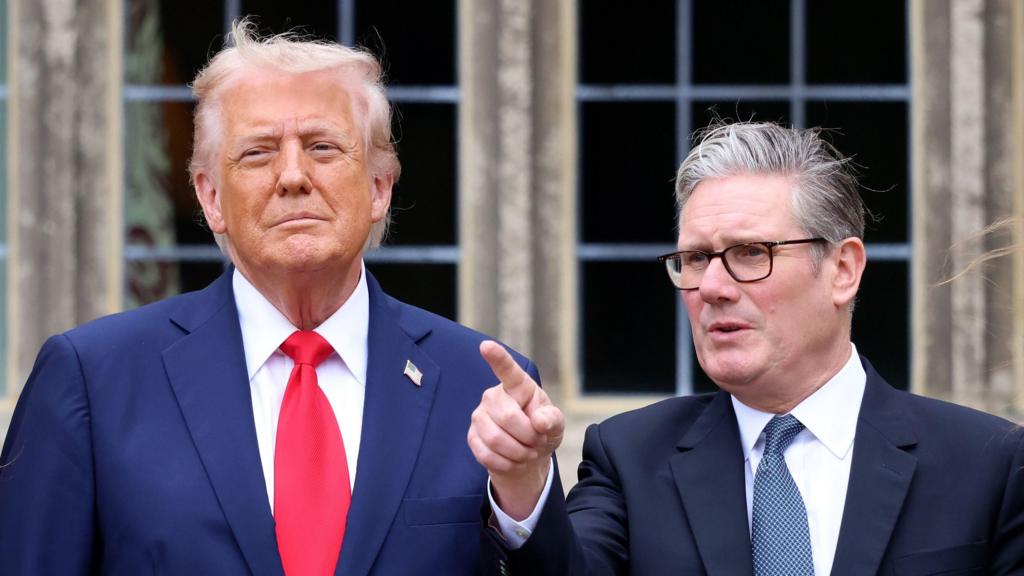
The ongoing geopolitical saga surrounding Greenland has dramatically escalated, plunging transatlantic relations into what European leaders are describing as a perilous “downward spiral.” Following Donald Trump’s renewed insistence on the US taking control of the vast Arctic territory, the former US President has announced sweeping tariffs targeting eight key NATO allies who have deployed troops to the region.
Trump Imposes Sweeping Tariffs on European Allies
In a fiery statement released via Truth Social, Trump confirmed that 10% tariffs would be immediately imposed on all goods exported to the United States from Denmark, Norway, Sweden, France, Germany, the United Kingdom, the Netherlands, and Finland, effective February 1st. This punitive measure, he stated, is a direct response to these nations positioning forces in Greenland—a move Trump framed as a threat to global security.
“This is a very dangerous situation for the Safety, Security, and Survival of our Planet,” Trump asserted, warning that the initial 10% levy would be swiftly followed by a crippling 25% rate starting June 1st. The tariffs, according to the former President, will remain in place until a “Deal is reached for the Complete and Total purchase of Greenland.” He reiterated his long-held concern that competitors, specifically naming China and Russia, view Greenland as an attainable prize, suggesting Denmark is incapable of protecting its interests.
European Condemnation and Warnings
The reaction from European capitals has been swift and overwhelmingly negative. Leaders across the continent have united in condemning the tariffs, viewing them not just as an economic threat but as a profound political assault on established alliances. EU officials quickly convened emergency sessions, characterizing the move as a severe destabilisation of the relationship between Washington and Brussels.
Kyriakos Petrakos, reporting for Everythiiing.com, noted that the prevailing sentiment among delegates was one of disbelief mixed with alarm. “The language used by European leaders suggests they see this as a fundamental challenge to the post-war order,” he observed. UK Labour leader Keir Starmer publicly labelled the tariffs as “completely wrong,” while the Liberal Democrats’ Ed Davey urged his contemporaries to “stand firm against the bully in the White House.”
Even those within the UK government expressed strong reservations. Trade Secretary Kemi Badenoch dismissed the rationale behind the tariffs, calling the idea of imposing trade penalties over Greenland a “terrible idea.”
The Greenland Factor: A Geopolitical Flashpoint
The dispute centres on the strategic importance of Greenland, an autonomous territory within the Kingdom of Denmark. Possessing vast, relatively untapped mineral resources and holding a critical position in the rapidly changing Arctic geography—especially as ice melts open new shipping lanes—Greenland has become a focal point for great power competition.
Trump’s move to effectively penalise NATO members for maintaining a presence in a region where US strategic interests are also paramount has deeply confused security analysts. The deployment of troops by European nations was ostensibly to enhance regional stability and monitor potential external influences, aligning broadly with NATO objectives, yet Trump has weaponised this cooperative security measure against them.
Public Reaction and Local Dissent
The fallout is not confined to high-level politics. Protests erupted across Denmark and in Nuuk, Greenland, rejecting Trump’s annexation ambitions. Reports from the ground indicate a strong sense of local autonomy being undermined by external pressure, whether from the US or elsewhere. Questions persist regarding what Greenlanders themselves truly think about being the subject of such high-stakes international manoeuvring, with many expressing frustration at being treated as a bargaining chip.
The escalating trade war has economic repercussions that extend far beyond the immediate eight nations. Analysts warn the tariffs could severely disrupt supply chains across Europe and the US, potentially triggering wider inflation and instability in commodity markets. The timing, just weeks before the new measures are due to take effect, leaves businesses scrambling to adapt to a fundamentally altered trade landscape.
Looking Ahead: Navigating the Spiral
As Finland’s President joins the chorus of condemnation, the unity among European nations stands in stark contrast to the unilateral actions emanating from Washington. The immediate concern for Brussels is whether this tariff threat is a precursor to further, perhaps more severe, political or military escalations concerning the Arctic. The coming weeks will test the resilience of the European Union and the depth of its commitment to collective defence when faced with direct economic coercion from its closest historical ally.
The situation remains fluid, but one thing is clear: the relationship between the US and its traditional European partners has entered a deeply uncertain and potentially damaging phase, driven by the high-stakes gamble over a remote Arctic island.