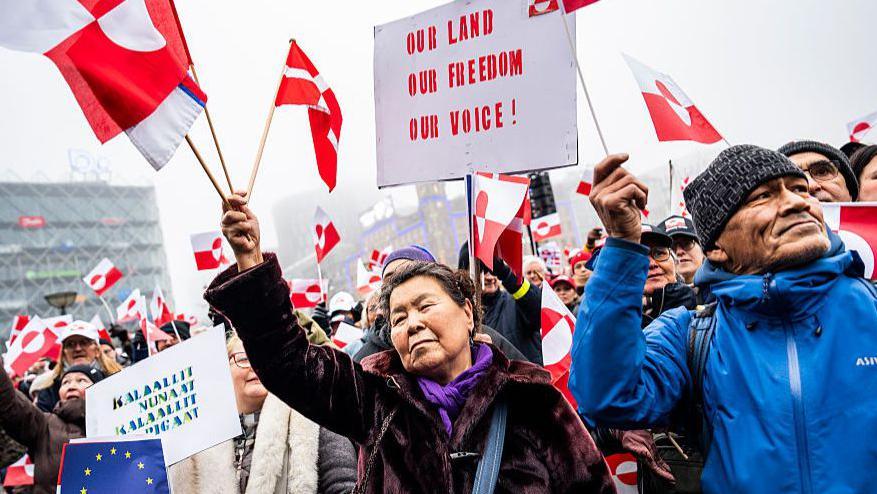
London, GB – The international political landscape has been rocked by a series of extraordinary pronouncements from US President Donald Trump, specifically concerning the potential acquisition of Greenland. The threats, which reportedly involve imposing damaging trade tariffs on key Western allies if they oppose the proposed annexation, are being described by analysts as “without parallel and precedent” in modern diplomatic history.
Unprecedented Coercion Against Allies
Faisal Islam, Economics Editor for the BBC, highlighted the surreal and dangerous nature of the situation. While the Trump administration has previously deployed unusual economic measures, the current scenario—levying trade warfare against established allies over a territorial ambition—marks a significant escalation. This tactic moves beyond standard trade disputes into what some observers are calling a form of economic siege against the very nations that form the bedrock of the Western alliance structure, including NATO partners.
The speed and nature of these threats have reportedly left officials in allied capitals baffled more than merely angry. The concept of a sitting US President publicly pressuring allies over the acquisition of territory belonging to another ally is so far outside established norms that many are struggling to process its sincerity or its potential backing within Washington. Questions are swirling regarding the level of support—within Congress, or even within the President’s own administration—for such a drastic foreign policy pivot.
The Shadow of TACO?
In political parlance, there is always speculation as to whether such aggressive posturing is merely a negotiating tactic—the “Trump will Chicken Out” (TACO) scenario. Economically, many affected nations have shown resilience. Canada, for instance, a country that has already faced significant trade friction with the US, has pivoted remarkably. Prime Minister Mark Carney’s strategy of aggressively pursuing global trade deals has seen Canadian international trade surge by 14%, effectively offsetting losses incurred from the US market.
Carney’s recent diplomatic push in China, promoting alternative trade structures, serves as a direct counterpoint to the isolationist tendencies sometimes championed by certain factions within the White House. This juxtaposition—an ally actively building global trade networks while facing US pressure—adds crucial context to the timing of the Greenland intervention.
The Rationale: A Deeply Worrying Foundation
If the threats are taken at face value, the implications extend far beyond the proposed 10% tariff. The core issue, experts argue, is the rationale itself: using economic leverage to coerce allies into accepting territorial changes. The global reaction, should this precedent be set, could fundamentally alter international governance. Leaders worldwide are reportedly drawing comparisons to how the world might react if geopolitical rivals like China or Russia issued similar threats to their partners.
The public nature of the announcement, often delivered via social media, further complicates the situation, leading many international observers to question the stability and coherence of American decision-making processes. The upcoming World Economic Forum meeting, where President Trump is scheduled to meet leaders of the very economies he has threatened, is now viewed with intense scrutiny.
Greenland and Denmark React
Both Greenland and Denmark have voiced strong opposition to the perceived coercion. Protests have erupted across both territories, underscoring a unified front against external pressure regarding sovereignty. Danish leaders have already deemed the tariff threat “unacceptable,” signalling a firm diplomatic stance against US economic bullying. Meanwhile, Greenlandic officials emphasize that any discussions surrounding their future must proceed through established diplomatic channels, rejecting threats as a basis for negotiation.
The coming days will be crucial. Whether this episode proves to be another temporary escalation that fades before the World Economic Forum, or the beginning of a sustained campaign to redefine transatlantic economic relationships, remains uncertain. What is clear is that President Trump’s latest move has pushed the boundaries of allied relations into uncharted and highly volatile territory, demanding swift and unified responses from capitals across Europe and beyond.