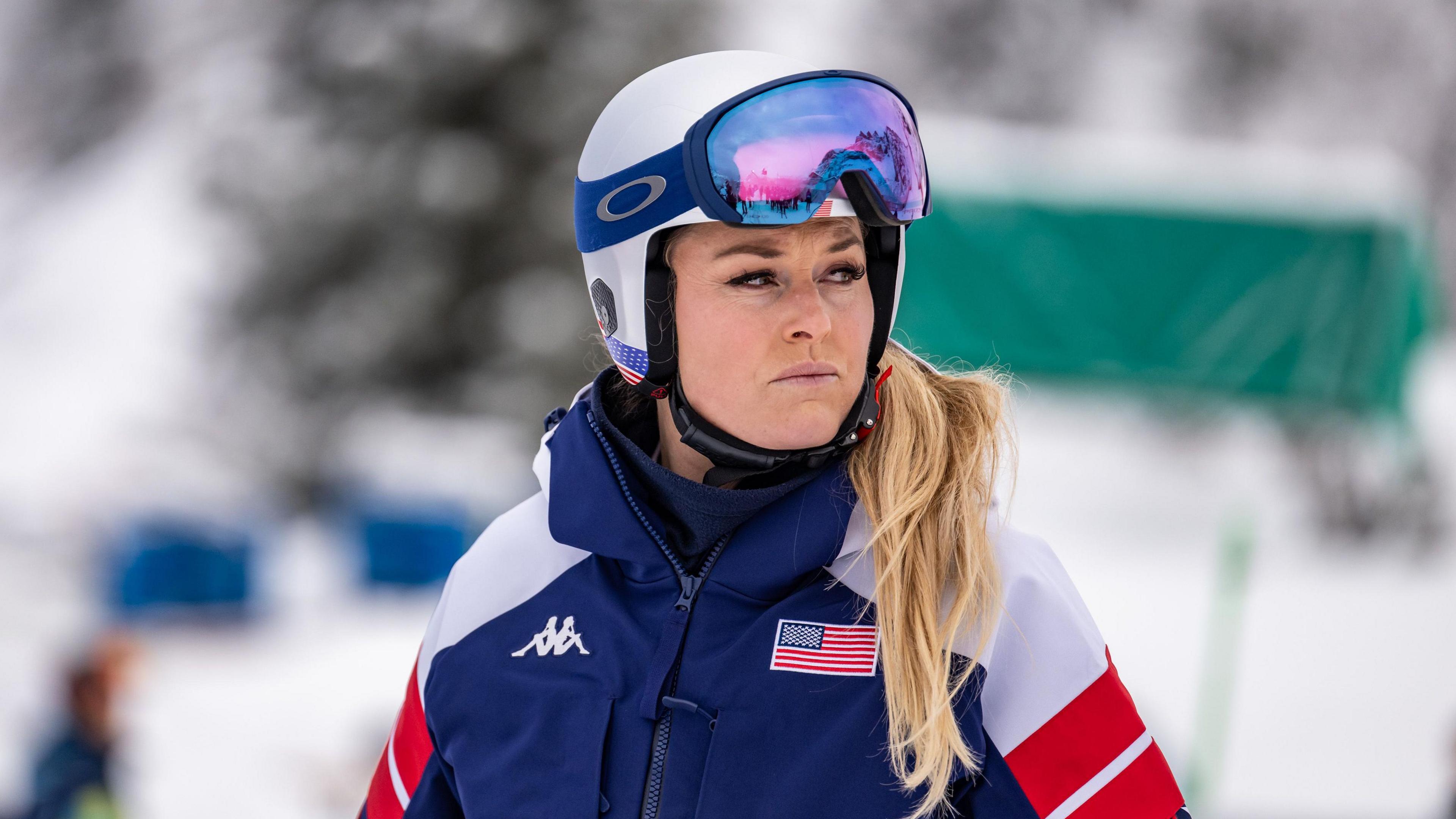
Lindsey Vonn's Tibia Fracture: No Regrets After Dramatic Olympic Crash
In the high-stakes world of alpine skiing, where speed meets peril on icy slopes, American icon Lindsey Vonn has once again tested the limits of human endurance. During the Women's Downhill event at the 2026 Winter Olympics in Milan-Cortina, the 41-year-old suffered a complex tibia fracture just 13 seconds into her run, marking a painful end to her fifth and final Games. Yet, in true Vonn fashion, she's emerging from the ordeal with unwavering resolve, declaring she has "no regrets" for daring to compete despite mounting injuries.
The Crash That Shook the Olympics
The incident unfolded on Sunday at Olimpia delle Tofane in Cortina d'Ampezzo, Italy, under clear skies and packed stands. Vonn, the 2010 Olympic downhill gold medalist and two-time world champion, launched from the starting gate with her signature ferocity. But disaster struck early when her arm snagged on a gate, disrupting her balance and sending her tumbling down the slope.
Medical teams rushed to her side, treating the skier on-site for an extended period before airlifting her to Ca Foncello Hospital in Treviso. There, surgeons operated on her fractured left tibia—a serious injury involving the larger of the two bones in the lower leg. Vonn now faces multiple surgeries and a grueling recovery, but her spirit remains unbroken.
This wasn't Vonn's first brush with adversity in the lead-up to the Olympics. Just nine days prior, during a race in Switzerland, she ruptured her anterior cruciate ligament (ACL) in her left knee. Undeterred, she confirmed the injury at a Wednesday media conference and vowed to race anyway. "The torn ACL and my previous injuries had nothing to do with my crash whatsoever," she later clarified, emphasizing that her decision was one of pure determination.
Vonn's Pre-Olympic Struggles
Vonn's journey to Cortina has been a testament to resilience. At 41, she's no stranger to the physical toll of elite skiing. Her career boasts numerous accolades, but it's also littered with setbacks, including a partial right knee replacement from earlier injuries. Despite these, she trained relentlessly, arriving in Italy with a fire to cap her Olympic legacy.
Her choice to compete with a fresh ACL tear drew mixed reactions. Fans and fellow athletes praised her bravery, hailing it as the epitome of Olympic spirit. Critics, however, questioned the wisdom of pushing through such risks, highlighting the sport's inherent dangers and the potential for long-term damage. Vonn addressed this head-on in her Instagram post on Monday: "It always was and always will be an incredibly dangerous sport. And similar to ski racing, we take risks in life."
A Message of Courage and Reflection
In the wake of the crash, Vonn shared a poignant reflection that has resonated worldwide. "Yesterday my Olympic dream did not finish the way I dreamt it would," she wrote. "It wasn't a storybook ending or a fairytale, it was just life. I dared to dream and had worked so hard to achieve it."
She described the moment in the starting gate as "an incredible feeling" and a "victory in and of itself," underscoring that simply having the chance to win was enough. Vonn's words extend beyond the slopes, offering a broader life lesson: "We dream. We love. We jump. And sometimes we fall. Sometimes our hearts are broken. Sometimes we don't achieve the dreams we know we could have. But that is also the beauty of life; we can try."
Her philosophy? "I hope if you take away anything from my journey it's that you all have the courage to dare greatly. Life is too short not to take chances on yourself. Because the only failure in life is not trying. I tried. I dreamt. I jumped." This mindset has defined Vonn's 20-plus-year career, from her early triumphs to her battles with injury and age.
The Broader Impact on Skiing and the Olympics
Vonn's crash has reignited discussions about athlete safety in high-speed events like downhill skiing, where speeds can exceed 100 km/h. The International Olympic Committee (IOC) and skiing's governing bodies continue to refine equipment and course designs, but the sport's thrill lies in its unpredictability. As the 2026 Games progress from February 6 to 22, Vonn's story adds a layer of human drama to the competition.
Team USA's medal hopes in alpine events take a hit without Vonn, but her influence endures. The U.S. Ski and Snowboard Association has rallied around her, with teammates expressing support. Meanwhile, the Olympic medal table evolves daily, with events like curling and skeleton drawing global attention—though not without their own controversies, such as a Ukrainian racer's war-related helmet ban.
For British viewers, the Games offer a chance to cheer on Team GB, who are eyeing medals in curling and other winter disciplines. Coverage is extensive on BBC platforms, including live streams on iPlayer, Radio 5 Live updates, and in-depth analysis on the BBC Sport app.
Looking Ahead: Recovery and Legacy
As Vonn embarks on rehabilitation, her fans await news of her progress. The tibia fracture, while complex, is treatable with modern medicine, and Vonn's history of comebacks suggests she'll return stronger—perhaps not to racing, but to inspiring others. Her final Olympics may not have ended in gold, but it solidified her as a symbol of perseverance.
In a sport where falls are inevitable, Vonn's leap of faith reminds us that true victory often lies in the attempt. As the Milan-Cortina Games continue, her story will undoubtedly fuel conversations about risk, reward, and the unyielding pursuit of dreams.
Follow Everythiiing.com for ongoing Winter Olympics coverage, including day-by-day guides, medal updates, and athlete profiles.