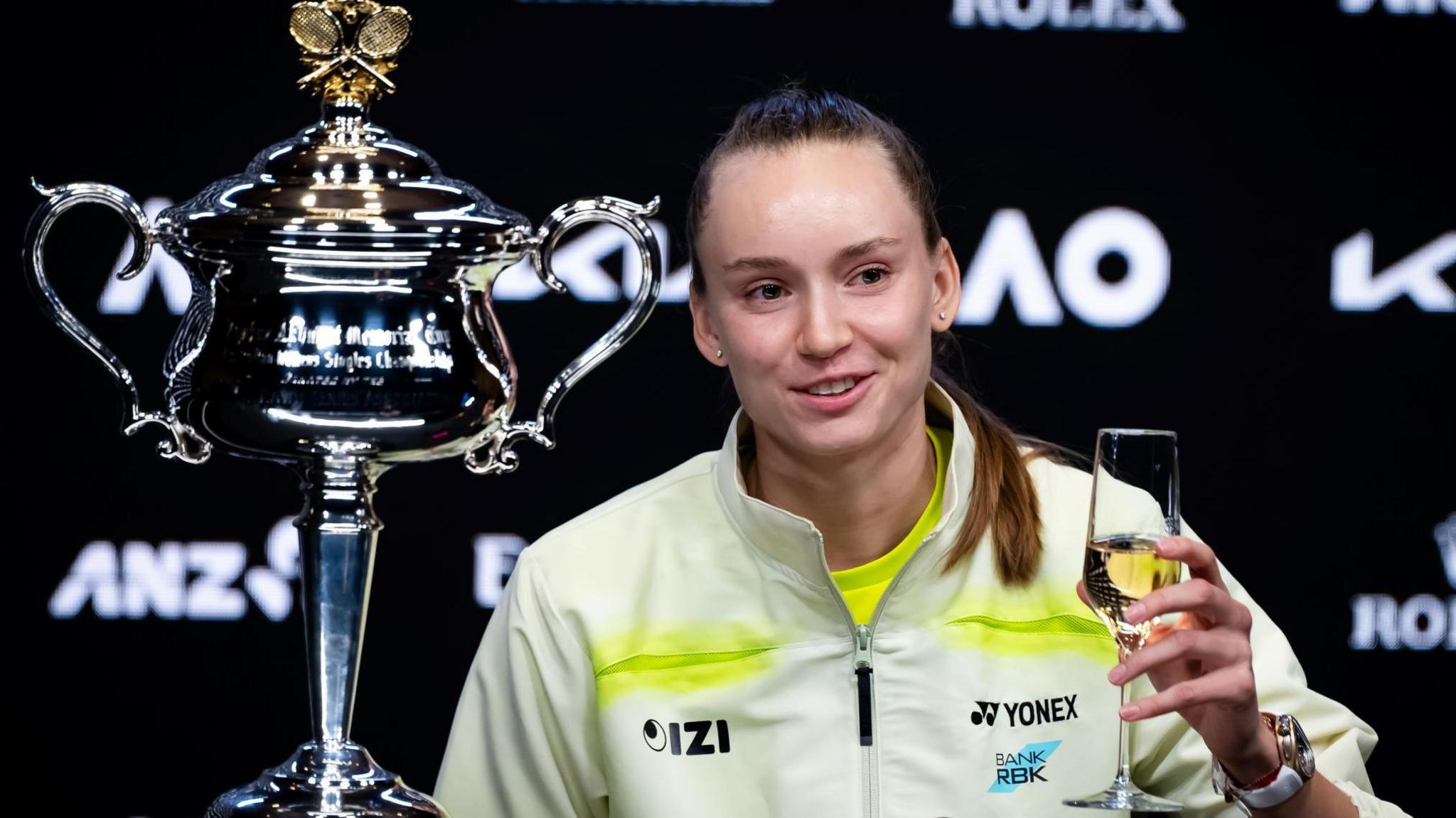
Rybakina Ends Four-Year Slam Drought at Australian Open 2026
In a match that captivated tennis fans worldwide, Elena Rybakina reclaimed her spot among the elite by defeating world number one Aryna Sabalenka 6-4, 4-6, 6-4 in the Australian Open 2026 women's singles final. The 26-year-old Kazakh star's victory marks her second Grand Slam title, ending a four-year wait since her stunning Wimbledon triumph in 2022. This Melbourne showdown not only highlighted Rybakina's resurgence but also signaled a potential shift in the dominance of the women's tour.
A Thrilling Final and Path to Glory
The final was a testament to the depth of talent in women's tennis. Both players traded blows in a high-stakes battle, with Sabalenka's power clashing against Rybakina's precision. The first set went to Rybakina after a gritty hold in the 10th game, but Sabalenka roared back in the second, breaking serve twice to level the match. In the decisive third set, Rybakina's composure shone through as she converted her second match point, clinching the title amid cheers from the Rod Laver Arena crowd.
Rybakina's run to the final was equally impressive. She dismantled second seed Iga Swiatek in the semifinals and sixth seed Jessica Pegula in the quarters, becoming the first player since 2019 to defeat top-10 opponents in every round from the quarterfinals onward. This streak underscores her ability to perform under pressure against the best in the game.
Key Stats That Define Her Dominance
Statistically, Rybakina's performance was flawless. She won 11 of her past 10 matches against top-10 players leading into the final, boasting the highest winning percentage (60%) against reigning world number ones since the WTA rankings began in 1975. Her serve, often described as the best in women's tennis, produced 12 aces in the final alone, with Sabalenka managing just eight. Both players won 92 points each, but Rybakina's efficiency in crucial moments made the difference.
Post-victory, Rybakina surged back to third in the WTA rankings—a career high she last held in September 2024. With 11 WTA Tour titles to her name, including this major, she's now positioned as a serious contender for year-end number one honors.
Rybakina's Journey: From Late Bloomer to Slam Champion
Born in Moscow, Rybakina's path to stardom was unconventional. A former gymnast and ice skater, she didn't commit to professional tennis until age 17, deterred from other sports due to her height. In 2018, Kazakhstan's tennis federation offered financial support, prompting her to switch nationalities—a move that paid dividends quickly.
Her breakthrough came in 2019 with a WTA title in Bucharest, followed by four finals in her first five events of 2020. She reached her first major quarterfinal at the 2021 French Open and exploded onto the scene with Wimbledon 2022, where she defeated Ons Jabeur in the final. However, injuries and inconsistencies followed, with her only subsequent major final a three-set loss to Sabalenka at the 2023 Australian Open.
The start of her 2025 season was rocky, but dedicated teamwork turned the tide. "I always believed I can come back to the level I was, but we all have ups and downs," Rybakina reflected post-match. "I thought maybe I will never again be in the final, or even get a trophy. But we've been putting in a lot of work as a team." Her understated celebration—a clenched fist and head shake—mirrored her Wimbledon moment, but the confidence in her voice suggested bigger reactions may follow.
Expert Praise: Untouchable When On Form
British tennis pundit Annabel Croft, commentating for BBC Radio 5 Live, was effusive. "When Rybakina is fit and on fire, she is untouchable," Croft said. "Her ball-striking quality is so pure, and her shots just sound different because of the way they come out of the strings. The depth she creates on the court, with her low and flat strikes, is fantastic. We were all just marvelling at her serve—I think it is absolutely beautiful and the best in the women's game."
This victory disrupts the recent hegemony of Sabalenka and Swiatek, who have claimed eight of the 13 Slams since Rybakina's Wimbledon win. At 26, Rybakina's prime years align perfectly for a sustained challenge. Her 10-match winning streak against top-10 foes positions her as a dark horse for Roland Garros and beyond.
Implications for Women's Tennis in 2026
Rybakina's Australian Open success could be the springboard for a dominant era. With Sabalenka dropping to second in the rankings and Swiatek facing questions after her semifinal exit, the tour feels wide open. Rybakina's mental resilience, honed through adversity, combined with her technical prowess, makes her a formidable force.
Fans in the UK and beyond tuned in via BBC Sport, where coverage highlighted the global appeal of the event. As Rybakina humbly noted after Wimbledon, "Maybe one day you will see huge reaction from me." Saturday's fist pump was restrained, but her gameplay screamed champion. The tennis world now watches eagerly for her next move.
This triumph isn't just a personal milestone; it's a reminder of tennis's unpredictability. Rybakina's return to the top reenergizes the sport, promising more epic battles ahead.