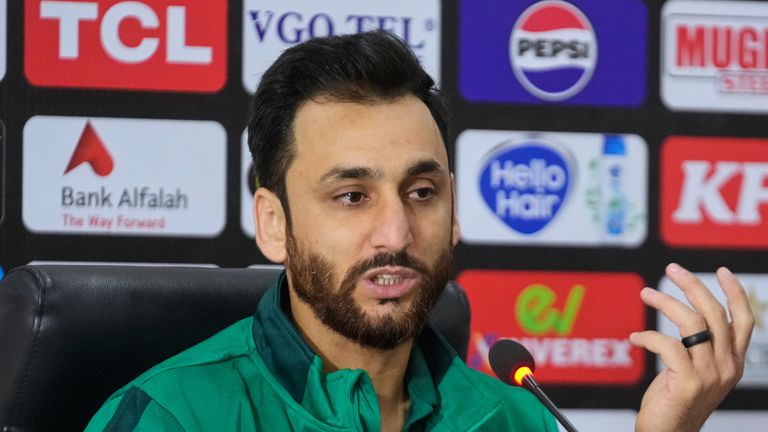
Salman Ali Agha Places Handshake Decision on India Amidst Tensions
In a move that underscores the complex geopolitical landscape surrounding cricket, Pakistan's T20 team captain, Salman Ali Agha, has declared that the decision of whether to shake hands with the Indian team will be left to their opponents. This statement comes ahead of a highly anticipated T20 World Cup match scheduled to take place in Colombo, Sri Lanka.
The upcoming fixture marks the first time the arch-rivals will face each other since a contentious encounter at the Asia Cup tournament in the UAE last September, where India emerged victorious. The lingering political and military tensions between the two nuclear-armed neighbours, which saw them on the brink of all-out conflict in May 2025, cast a long shadow over sporting interactions.
A Captain's Stance on Sportsmanship
Speaking to reporters, Salman Ali Agha articulated his perspective on the matter. "The game should be played in the real spirit, the way it has been played since it started," he stated. He further elaborated, "The rest is up to them (India), what they want to do." This measured response suggests a desire to focus on the game itself while acknowledging the broader context.
Agha reiterated the team's primary objective: "We are here to play cricket. We will play good cricket. We will take all those calls tomorrow. We will see tomorrow (Sunday)." This indicates a commitment to professionalism and a readiness to engage on the field, regardless of external pressures.
A History of Acrimony and Hope
The history between India and Pakistan on the cricket field is not just one of fierce competition but also one that has often mirrored the strained diplomatic relations between the two nations. The previous Asia Cup encounter saw players refusing to shake hands, a stark contrast to the more convivial scenes witnessed in earlier years, such as the handshake between players in 2011.
Heightened tensions have meant that the two cricketing giants have not engaged in a bilateral series for many years. The last significant escalation in conflict occurred in May 2025, following a terror attack in India-administered Kashmir that resulted in numerous civilian casualties. This led to a period of missile strikes before a ceasefire was brokered.
Navigating a Complex Sporting Landscape
The decision for Pakistan to participate in the T20 World Cup match was not without its own diplomatic hurdles. Pakistan's government had initially threatened to boycott the match after Bangladesh was disqualified from the World Cup for refusing to play in India due to security concerns. It was only after extensive negotiations with the International Cricket Council (ICC) that Pakistan ultimately agreed to participate.
The current arrangement sees India refraining from travelling to Pakistan for matches since 2008. While Pakistan did tour India for the 50-over World Cup in 2023, subsequent ICC tournaments have seen them playing at neutral venues, a testament to the ongoing challenges in scheduling bilateral ties.
Looking Ahead: Cricket's Role in Diplomacy
Despite the historical record, which shows India with a commanding 12 victories in 16 T20 games against Pakistan, Salman Ali Agha remains optimistic about his team's prospects. "We don’t have a good record against them in World Cups," he admitted. "But whenever you come to play a new match, it’s a new day and you have to play good cricket to win. You can't change history. You can learn from it."
This approach reflects a mature understanding of the sport and its place within a larger narrative. While the political climate may dictate certain protocols, the spirit of cricket, as championed by captains like Agha, aims to transcend these boundaries. The upcoming match, therefore, is more than just a sporting contest; it's a delicate dance between nationhood, rivalry, and the enduring hope that sport can, perhaps, foster a path towards understanding, even if the handshake itself remains a symbolic gesture awaiting a decision from across the border.

