Who Are AIN Athletes at the 2026 Winter Olympics and Why Is Russia Still Banned?
As the world gears up for the 2026 Winter Olympics in Milano-Cortina, Italy, a spotlight falls on a unique group of competitors: the AIN athletes. Standing for 'Athletes Individual Neutral,' these individuals hail from Russia and Belarus but will not wave their national flags. Instead, they'll compete under a neutral banner, a direct result of ongoing international sanctions tied to geopolitical tensions. This setup underscores the Olympics' delicate balance between sport and politics, ensuring the Games remain a stage for personal achievement amid global conflicts.
The Ban on Russia and Belarus: A Timeline of Events
The story begins in February 2022, when Russia's full-scale invasion of Ukraine sent shockwaves through the international community, including the sports world. The International Olympic Committee (IOC) swiftly responded by recommending that global sports federations bar Russian and Belarusian athletes from competitions. Belarus, as a close ally, had facilitated Russian military operations, further entangling it in the sanctions.
During the 2022 Beijing Winter Olympics, Russian athletes had already competed as 'Russian Olympic Committee' (ROC) entrants, but the invasion prompted immediate backlash. The International Paralympic Committee went further, imposing a last-minute ban just before the Paralympics, averting boycotts from nations like the US and UK.
The formal suspension came in October 2023. The IOC cited the Russian Olympic Committee's absorption of sports bodies in occupied Ukrainian territories—Donetsk, Kherson, Luhansk, and Zaporizhzhia—as a violation of the Olympic Charter. This move infringed on the territorial integrity of Ukraine's National Olympic Committee (NOC), leading to the ROC's cutoff from Olympic funding and a blanket ban on national participation.
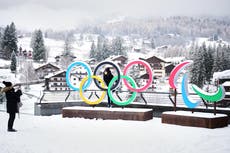
Fast forward to 2026: With the Milano-Cortina Games set to open on February 6, 92 nations will send teams. Russia and Belarus, however, remain absent as collectives. Protests near venues highlight the lingering tensions, with demonstrators clashing with police to voice solidarity with Ukraine.
Why the Neutral Flag Option Exists
Despite the bans, the IOC has carved out an exception for 'clean' athletes—those not linked to military or political entities supporting the war. These individuals must prove their neutrality and adhere to strict eligibility criteria, competing without national anthems, flags, or uniforms. The neutral flag, often a simple white design, symbolizes this detachment.
This policy echoes past precedents, like the 'Olympic Athletes from Russia' (OAR) at the 2018 PyeongChang Games amid doping scandals. It allows the Olympics to uphold inclusion while enforcing accountability, though critics argue it dilutes national pride and complicates fair play.
Who Are the AIN Athletes and What Sports Will They Compete In?
While specific names for 2026 remain under wraps until qualifications conclude, AIN athletes are expected in disciplines like figure skating, biathlon, and cross-country skiing—Russian strongholds. In past Games, figures like Alina Zagitova (2018 gold medalist) competed under neutral status, showcasing talent undimmed by politics.
Eligibility is rigorous: Athletes must be vetted by international federations, declare no support for the invasion, and avoid any state funding tainted by the conflict. For Belarusians, the bar is similar, though fewer may qualify given the smaller pool.
The IOC's decision reflects a commitment to 'sport washing' away war's stains, but it also raises questions. How many AINs will there be? Early estimates suggest a handful, far short of Russia's pre-ban contingents of over 200. This limited presence ensures the Games proceed without endorsing aggression, yet it invites debate on whether individual redemption justifies national exclusion.
Implications for the Athletes and the Games
For AIN competitors, the stakes are personal. Stripped of national glory, victories feel bittersweet—no podium anthems, no flag-raising ceremonies. Yet, for many, it's a chance to honor their craft amid adversity. Ukrainian athletes, meanwhile, train with heightened resolve, viewing the Olympics as a symbolic battlefield.
Broadly, the bans highlight sports' vulnerability to geopolitics. Climate change already threatens winter events with warming slopes and erratic snow, but political exiles add another layer. Venues in Milano-Cortina face delays, with some facilities unfinished, amplifying logistical woes.
The IOC's stance also influences global diplomacy. By allowing AIN participation, it signals that sport can transcend borders, even fractured ones. However, ongoing war in Ukraine means the ban could extend to 2028 Los Angeles, prolonging uncertainty for these athletes.
The Bigger Picture: Olympics in a Divided World
The 2026 Winter Olympics arrive at a pivotal moment. With 92 nations competing, the absence of two powers reshapes medal tallies and narratives. Expect dominance from Norway, Germany, and hosts Italy in skiing and skating, but AIN entries could still snag surprises in precision events.
Beyond the ice and snow, the Games spotlight resilience. Pairs like Britain's Lilah Fear and Lewis Gibson eye gold in ice dance, embracing pressure as a motivator. For AINs, pressure is existential—proving worth without a homeland's backing.
As protests echo and bans hold firm, Milano-Cortina will test the Olympic ideal: unity in diversity. Whether AIN athletes thrive or fade, their story reminds us that sport, like life, navigates gray areas with grace and grit.
In a world of conflicts, the neutral flag flies as both shield and symbol—a quiet rebellion against division.