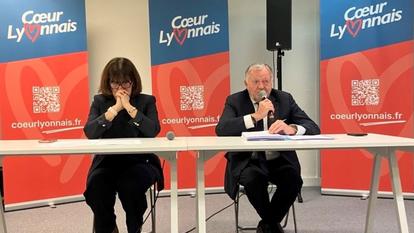
Lyon, France – A highly ambitious infrastructure project championed by Jean-Michel Aulas, the former head of Olympique Lyonnais (OL) and a burgeoning political figure in Lyon, appears to have hit a spectacular dead end. The proposed eight-kilometer mega-tunnel, designed to bypass and alleviate chronic congestion at the notorious Fourvière tunnel, has been decisively shelved by the French Ministry of Transport, despite strong local backing.
The Ambitious Vision Meets Harsh Reality
The proposal, central to Aulas’ political platform ahead of upcoming municipal elections, aimed to tackle one of Lyon’s most persistent urban nightmares: the perpetual gridlock plaguing the Fourvière crossing. With an estimated 40 million vehicles passing through annually, the existing tunnel has long been cited as a significant source of traffic delays and air pollution in the metropolitan area.
Véronique Sarselli, running on Jean-Michel Aulas’ “Grand Cœur Lyonnais” list, had championed the subterranean bypass as a “historic” solution to finally “unclog the Fourvière bottleneck.” The project was framed as a necessary, albeit massive, investment in the region’s future mobility, directly contrasting with the transport policies favored by the incumbent Green administration.
Political Opposition Mounts
However, the concept quickly attracted intense scrutiny and widespread criticism, not just from political rivals, but also from within the broader conservative sphere supporting Aulas’ movement. Concerns centered primarily on the project’s staggering projected cost and significant technical feasibility challenges. Critics argued that the massive undertaking offered questionable returns on investment given the complexity of tunneling beneath a dense urban environment.
The final, crushing blow came from the highest level of transport authority. Philippe Tabarot, the Minister of Transport—ironically a member of the LR party, which generally aligns with Aulas’ political leanings—publicly dismissed the proposal with stinging sarcasm. Speaking on Public Sénat, Minister Tabarot reportedly stated that there was “more chance of OL winning the Champions League” than this tunnel project being realized.
This declaration effectively marks the end of the line for the project, which had not even broken ground but was already being referred to as “buried before it was even dug.”
The Aftermath: Political Fallout in Lyon
The collapse of the tunnel plan forces Aulas’ political coalition to pivot rapidly. Aulas had built a significant portion of his campaign narrative on rejecting the current administration's transport strategy, often criticizing what he perceived as insufficient investment in road infrastructure to handle the city’s reality. The failure to secure governmental support for his flagship infrastructure project is a major blow to his credibility as a serious contender for metropolitan leadership.
Local political observers suggest this defeat will intensify the existing tensions between Aulas’ camp and the environmentalists governing Lyon. The incumbents have recently unveiled their own budget proposals, focusing on initiatives like the “sport pass” and free public transport for minors, further highlighting the ideological chasm regarding urban transit priorities.
The Fourvière Dilemma Persists
Despite the political maneuvering, the fundamental problem remains: the Fourvière tunnel is obsolete and causes daily disruption. For decades, this passage has symbolized the struggle between preserving Lyon’s historic character and accommodating the demands of a growing modern metropolis. While Aulas’ grand solution has been rejected, the need for effective, feasible solutions to ease traffic flow is more pressing than ever.
The debate now shifts to alternative, potentially less disruptive, modernization strategies for the existing infrastructure or enhanced public transit alternatives. The political landscape in Lyon is clearly volatile, with the upcoming municipal elections set to be a referendum not just on leadership, but fundamentally on how the city intends to move forward physically and environmentally.
Jean-Michel Aulas and his team must now rally support around revised, more pragmatic proposals if they hope to challenge the established order. The dream of a massive subterranean artery connecting the city’s arteries has been definitively shut down by the Ministry, leaving Lyon’s drivers once again stuck in the frustrating reality of the present.
The article, originally published in Le Figaro Lyon, notes that while the political battle lines are drawn, the technical and financial realities of mega-projects often outweigh campaign promises, a lesson learned sharply by Aulas’ team this week.

