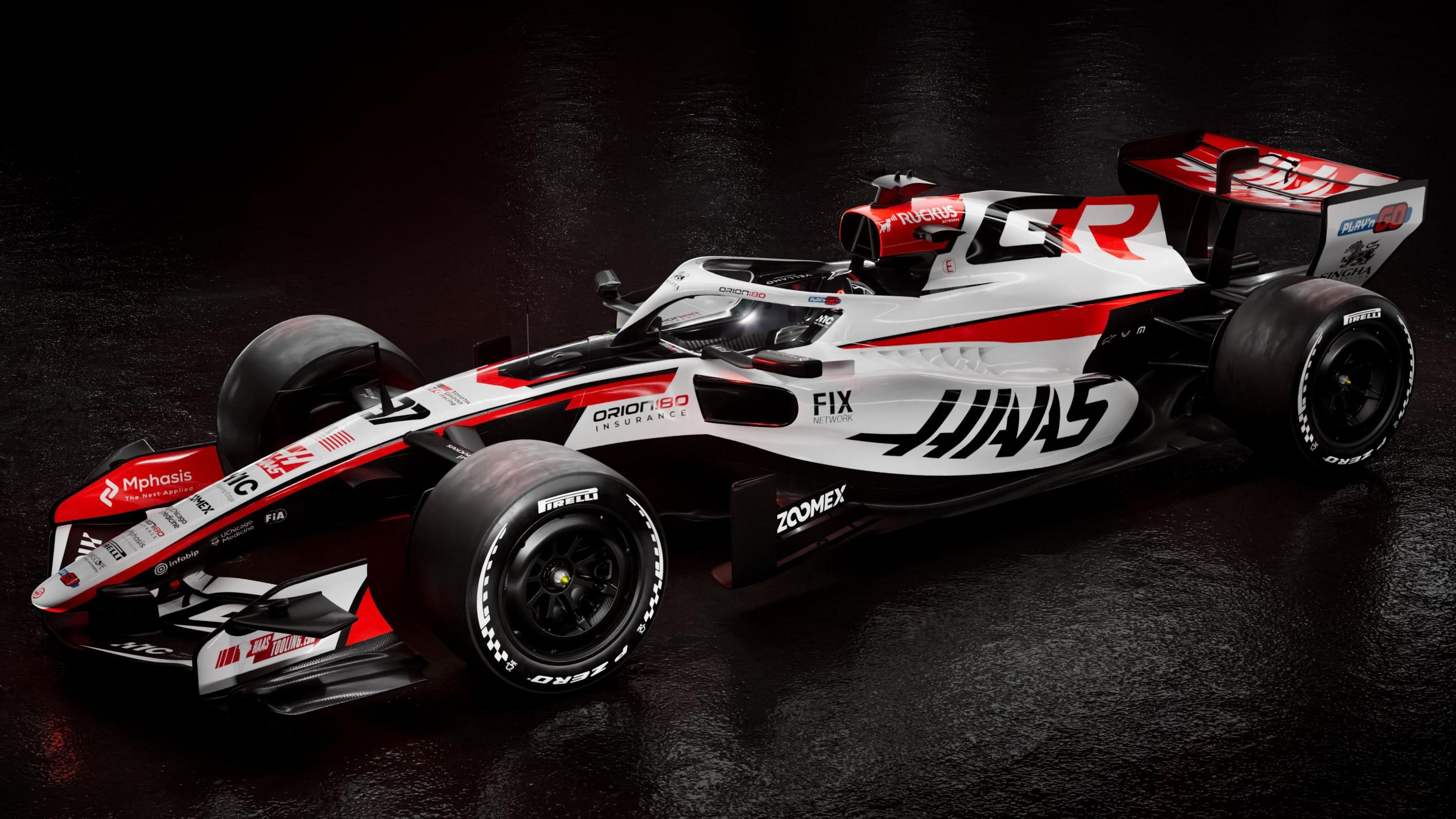
Haas Leads the Way: First Look at the 2026 F1 Era
In a move signaling the imminent and dramatic overhaul of Formula 1, the Haas F1 Team has become the first constructor to release digital renders of its challenger for the 2026 season. This unveiling offers the first tangible glimpse into how teams are interpreting the sport’s most significant technical regulation change in decades, promising a dynamic and potentially unpredictable grid.
The digital images of the proposed Haas VF26 showcase key visual departures from current machinery. The 2026 cars are mandated to be smaller and narrower, reflecting a new aerodynamic philosophy designed to improve racing by reducing the turbulent 'dirty air' that plagues close-quarters battles. Among the most noticeable features visible on the render are a significantly narrower front wing design and the reintroduction of a fin atop the engine cover—a feature also spotted on the Cadillac team’s private test car.
Adapting to a New Technical Landscape
The 2026 regulations are not merely aesthetic; they represent a fundamental shift in power unit philosophy as well. While the core remains a 1.6-litre V6 turbo-hybrid, the electrical components will now account for a much larger percentage of the overall power output—up to 50%. Crucially, these power units must run exclusively on fully sustainable fuel derived from waste biomass or industrial synthetic processes.
This heavy weighting towards electric power introduces unprecedented challenges, particularly around energy management. As Team Principal Ayao Komatsu acknowledged, balancing the battery's depletion and recharge cycle over a lap and an entire race distance will be a central focus for every team.
The Challenge for F1’s Smallest Team
Komatsu candidly admitted that the scale of the technical revolution presents a magnified challenge for Haas, F1’s smallest independent operation. “I don't think any team, even the biggest, is going to say they're fully equipped to tackle this. However, for us, the challenge is bigger,” Komatsu stated.
He highlighted two primary variables that will drive significant performance variance between teams early in the season: the Power Unit (PU) supply and the completely open aerodynamic development path. With multiple teams relying on the same engine suppliers (Mercedes supplying four, Ferrari three, Red Bull two, and Audi/Honda one each), the PU side might see a clustering of performance. However, the aerodynamic freedom means rapid development, ensuring the pecking order established in early races could look vastly different by the season's end.
A Dynamic Season Predicted
The expectation from Haas is that the initial races will serve as a sharp learning curve, followed by rapid convergence or divergence based on in-season development. “There's going to be huge variation between teams,” Komatsu predicted. “What you see in race one and race two, I expect will be totally different when we come to the final races of the year.”
The focus for teams like Haas in the immediate future will be on extensive simulation work before hitting the track. Private testing, such as the session planned for Barcelona in late January, will be critical for ironing out the complexities of the new energy management systems before the first public pre-season test in Bahrain in February.
Rival Activity and Future Reveals
While Haas has provided digital insight, rivals are also moving forward. Cadillac recently released highly controlled photographs of their car running at Silverstone, deliberately framed to obscure crucial design details. Meanwhile, Red Bull launched their new Ford partnership livery on a show car that bore little resemblance to their impending 2026 design.
The staggered approach to car launches over the next three weeks suggests that teams are keen to manage the narrative around their initial designs. For fans, the 2026 season, kicking off in Melbourne in March, promises to be one of the most significant resets in modern Formula 1 history, with Haas setting an early marker by showing their commitment to the new technical direction.