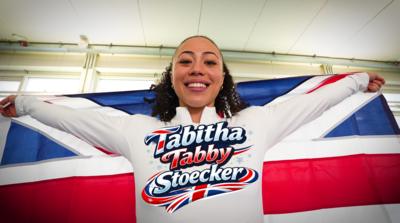
Tabby Stoecker: From Circus to Skeleton Gold Ambitions
The icy tracks of skeleton are a world away from the sawdust of a circus ring, yet for British athlete Tabby Stoecker, the skills honed in both disciplines are proving remarkably complementary. The 25-year-old is rapidly establishing herself as a formidable force in one of the Winter Olympics' most exhilarating and dangerous sports, with her sights firmly set on Olympic gold at the Milan-Cortina Games in 2026.
A Unique Path to the Podium
Stoecker's journey to the elite level of skeleton is anything but conventional. While many athletes dedicate their formative years solely to their chosen sport, Stoecker spent time at circus school, mastering skills such as juggling and the flying trapeze. This unconventional background, she reveals, has been instrumental in building the confidence and mental fortitude required to launch oneself headfirst down a treacherous ice chute at speeds exceeding 130 km/h.
"Skeleton is unlike anything else, and so addictive," Stoecker told BBC Sport. Her description captures the raw appeal of a sport that demands immense courage, precise control, and an unwavering nerve. The inherent risks are undeniable, but for Stoecker, the thrill is part of the allure.
Circus Skills: An Unexpected Advantage
The parallels between circus performance and skeleton are perhaps more profound than they first appear. Both require an exceptional level of body awareness, balance, and the ability to perform under intense pressure. Juggling, for instance, demands constant focus and split-second adjustments, while the flying trapeze instils a deep understanding of momentum and spatial orientation.
"I think it's given me the confidence to take on the challenge of skeleton," Stoecker explained. The ability to trust her body, to react instinctively, and to remain calm amidst chaos are all qualities that a circus performer cultivates, and which are vital for a skeleton athlete navigating the unforgiving curves of a track.
Chasing Olympic Gold
Stoecker is already a proven performer on the international stage. She is a double world silver medallist in the mixed team event, partnering with fellow British slider Matt Weston. This success is a strong indicator of her potential to challenge for individual honours at the highest level.
She aims to follow in the illustrious footsteps of British skeleton legends Lizzy Yarnold and Amy Williams, both of whom have captured Olympic gold. The pressure to perform on the Olympic stage is immense, but Stoecker's unique training and experiences appear to have equipped her with a distinct advantage in managing that pressure.
The Appeal of Speed and Adrenaline
For those unfamiliar with skeleton, the sport involves athletes lying face-first on a small sled, feet-first, and hurtling down an icy track. It is a test of nerve, skill, and sheer speed, with the slightest error in steering or body position having significant consequences.
The appeal of such an extreme sport lies in its raw adrenaline and the ultimate test of human capability against the elements. Stoecker's passion for it is evident, describing it as "addictive" – a sentiment likely shared by many who have experienced the exhilarating rush of sliding at breakneck speeds.
Looking Ahead to Milan-Cortina 2026
With the 2026 Winter Olympics on the horizon, Tabby Stoecker is a name to watch. Her dedication, combined with her unconventional skillset, positions her as a genuine contender. The transition from the theatricality of circus to the high-stakes world of elite winter sports demonstrates a remarkable adaptability and a fearless spirit.
As she continues to hone her craft on the demanding skeleton circuits, Stoecker's story serves as an inspiring reminder that the path to success can be paved with unexpected talents and a willingness to embrace the extraordinary. The GB Snowsport team will be eagerly anticipating her performance as she aims to bring home Olympic glory.

